

The annual report for 2025 shows that the company's turnover landed at just over half a million. This represents an increase of over 2,000 percent compared to the previous, shortened fiscal year, where turnover amounted to approximately SEK 24,500. Profitability also took a step in the right direction, with operating profit turning from a small loss to a profit of SEK 27,700 in 2025.
The founders now reveal that sales during the first eight months of the year have been six times higher compared to the same period last year. For the full year 2026, the company expects turnover to land around SEK 2.2 to 2.4 million.
From Side Project to Full-Time Venture
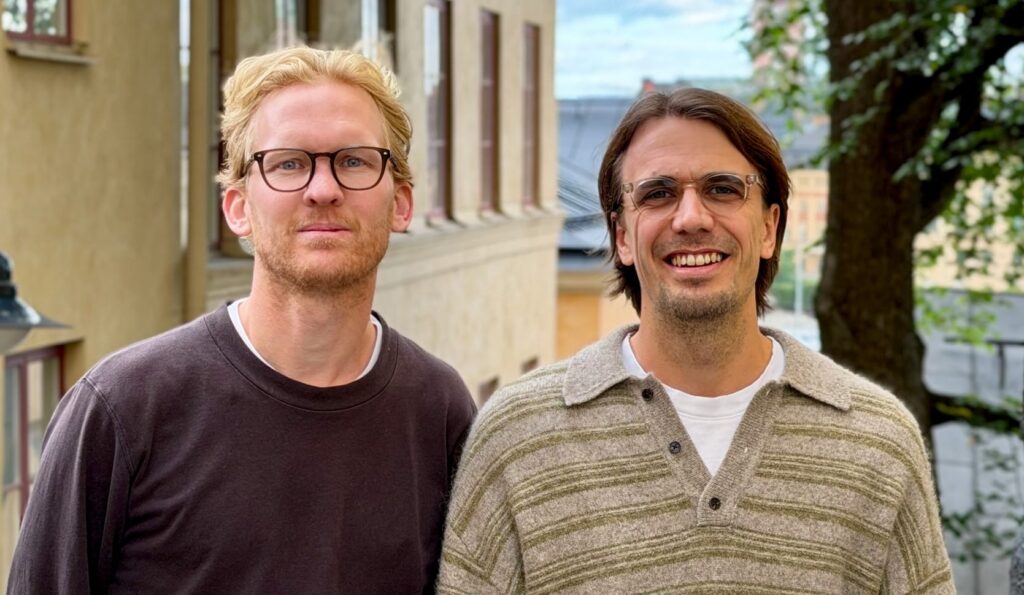
The increased turnover has enabled the founding duo to take the next step in their entrepreneurship. Both Anders Blomquist and Vilhelm Olin now work full-time with the business.
During the first three months of the year, they did not take any salary at all, and thereafter they have withdrawn low salary amounts. However, the goal is for the business to be able to bear market-based salaries for both of them during the first quarter of 2027.
For a year ago, we were trying to put Swopti together alongside our other jobs. Now we can devote all our time to the company and also start moving some of the operational aspects away from ourselves, says Vilhelm Olin.
He notes that this shift in how they work with the company has yielded results.
It feels like we've gone from testing if the idea works to actually trying to build something real.
The step towards a full-time venture also reflects the clear increase in volume that the company has handled recently, where the number of orders has skyrocketed.
Tripled Pace
At the end of July, the e-commerce platform surpassed 1,000 re-glazed frames. The first 500 re-glazings took about 16 months to complete. After that, it only took five months to reach the next 500, meaning the pace has more than tripled.
It actually feels quite big to have passed 1,000 frames. At the same time, it almost feels like we're just getting started when you look at how many glasses already exist in Swedish homes, says Anders Blomquist.
According to previous surveys from Sifo and Novus, there are about nine million unused glasses in Swedish households. Anders Blomquist points out that the exact figure is not the important thing, but that there are enormous amounts of frames that are not serving any function.
The point is that there are already a lot of glasses out there that aren't being used, says Anders Blomquist.
He adds that some of these old glasses can be donated or are broken, but that many frames have been left lying around simply because the owner's vision has changed or because the lenses are scratched.
Somewhere in that big pile there are also a lot of frames that people still like.
To reach the owners of all these drawer glasses, the founders have realized that a changed strategy is required when it comes to marketing.
The Challenge of Educating Consumers
In the beginning, almost all of the company's customers came organically, as they were already looking for the opportunity to replace the lenses. Now that the company needs to grow faster, the cost per customer has increased as the advertising budget has grown.
But according to the founders, the large volume of potential customers still do not know that it is possible to re-glaze their existing frames.
Making that alternative known requires a different type of marketing than capturing those who are already searching, and that's where we're putting the money now.
The company tested a higher budget in the spring but lowered it again when the return did not meet their requirements. Instead, they are adjusting the pace to what demonstrably works.
Even when marketing works and the customer decides to place an order, there are several steps in the physical process that must function seamlessly.
Physical Handling and New Partners
The most common question in the company's customer service is whether it is even possible to replace the lenses in the customer's specific model. Many consumers feel worried about posting away frames that they like and have worn every day for years.
Statistics show that one to two percent of the frames are damaged during handling, often because the plastic in older models has become dry.
There is a risk, we shouldn't hide that. But the alternative is often that a frame you like will lie in a drawer, says Anders Blomquist.
If something breaks during handling, the customer does not pay anything for the new lenses, and if a completely new frame breaks, it will be replaced against receipt.
To build trust and minimize the company's internal bottlenecks at the packing tables, they have recently hired a logistics partner who sends out starter kits with a box and case. The lab that handles the grinding also has the capacity to handle significantly larger volumes than today.
With a more solid infrastructure in place, the company can begin to explore how technology can be integrated into new markets.
New Business Models and B2B
The company is currently in dialogue with other companies about collaborations, with the aim of providing ordering, logistics and re-glazing for other actors' customers.
B2B sales is also on the agenda, for example by offering employees the opportunity to re-glaze their private frames into safety glasses.
That's probably where it starts to feel like Swopti is entering a new phase. A year ago, a lot of it was about proving to ourselves that the service worked and that there was actually a demand, says Anders Blomquist.
The founders are lifting their gaze from the purely operational to start developing the e-commerce platform strategically in several areas.
We still have a lot to prove, but it feels like we're starting to lift our gaze a bit. We see more paths forward than just selling one re-glazing at a time, says Vilhelm Olin.
Despite future plans regarding collaborations and B2B, the main focus is currently on managing the core business. Even though the e-commerce platform has just celebrated its first major milestone, the founders are very aware of the enormous volume of unused frames that they still have to address in Swedish homes.
So yes, 1,000 frames. We'll never catch up with that whole pile. But it feels like a pretty nice thing to work on, says Anders Blomquist.