

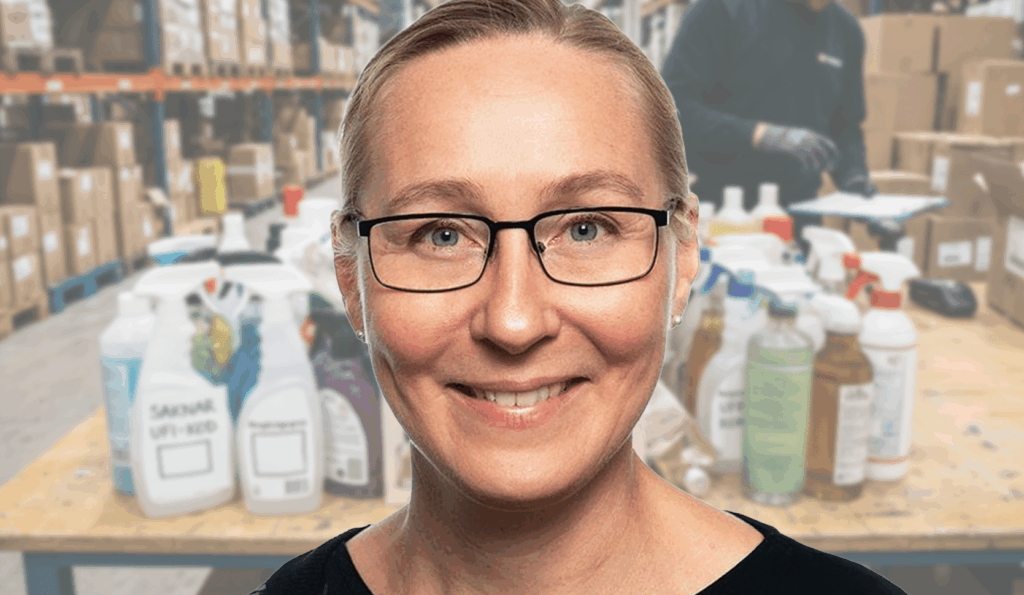
The review shows that Swedish companies are struggling to reconcile the written information about their goods. In 58 percent of the Swedish cases reviewed, there was a discrepancy between the information that companies had reported to the authorities and the information contained in the products' own safety data sheets.
This means, in other words, that there are two different versions of what the same product actually contains. For other countries in the EU, this figure was 17 percent.
The discrepancies in the data create an obstacle when an accident occurs and healthcare quickly needs to know how a patient should be treated.
Sofia Walles, inspector at the Swedish Chemicals Agency, emphasizes that the deficiencies should not be reduced to mere administrative negligence:
These are serious deficiencies. It's not just about rules not being followed, but about risks to people's health, she says.
A total of 18 countries' inspectors have examined 1,597 products. The survey included common e-commerce goods such as detergents and air fresheners, such as reed diffusers.
For healthcare to be able to identify the contents in the event of an incident, the law requires companies to put a unique identification code on the packaging. This code acts as a key to unlock detailed information with the poison control centers.
The Code Loses Its Purpose
At the European level, it turned out that 19 percent of the reviewed goods were completely missing a notification in the systems, and 15 percent lacked the mandatory code. Regarding the printing on the packaging, Swedish companies follow the rules well, as only 5 percent of the goods here lacked a code.
The problem arises because the code loses its function if the underlying information is incorrect. Healthcare must be able to trust the registers in order to act quickly.
Fast and accurate information is crucial in acute poisonings. Incorrect, contradictory or missing information can lead to people receiving the wrong treatment, concludes Sofia Walles.