

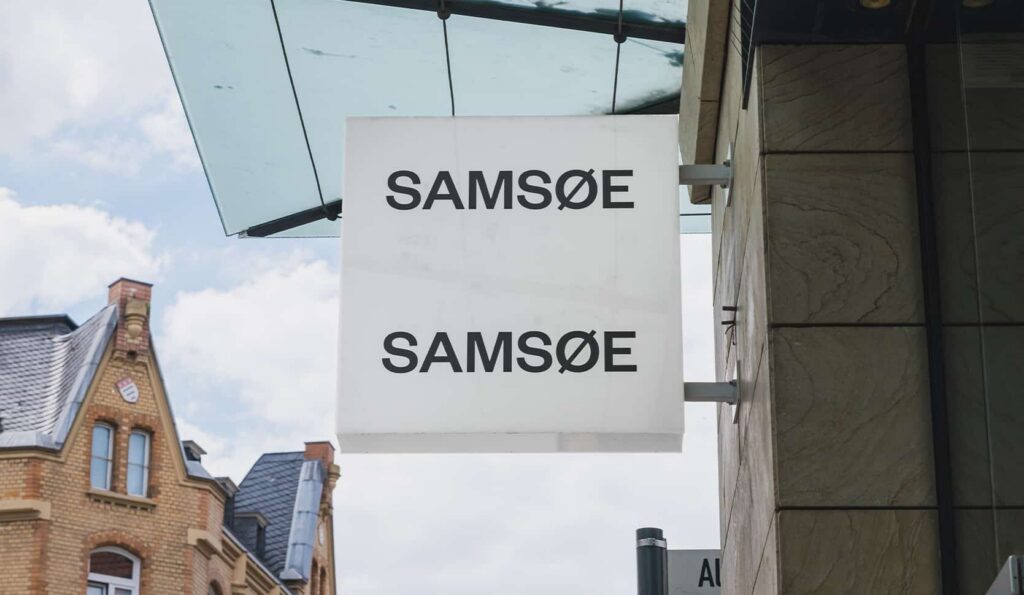
Sales for the Danish brand's Swedish retail branch continue to increase. Last year, the company's turnover reached 25.4 million Swedish krona, compared to 24.2 million Swedish krona the year before. This corresponds to an increase of approximately 5 percent.
At the same time, the company is taking a step forward in terms of profitability. Operating profit for 2025 amounted to 589,415 Swedish krona. This compares to 2024, when operating profit showed a loss of 2.5 million Swedish krona. The year's result also turned from a loss of 2 million Swedish krona to a profit of 1.1 million Swedish krona.
Merger of stores
The upward trend in retail follows after the company implemented structural changes in Sweden.
Previously, several of the brand's physical stores, including in Kungsbacka, Barkarby and in the Mood gallery, were operated in separate limited companies. The company has instead chosen to integrate these operations under a single company.
This restructuring is highlighted as an explanation for the growing revenue.
Digital investment in support
It is not only in the physical stores that Samsøe Samsøe has made changes.
Last year, the fashion house launched a completely new digital platform in collaboration with the design agency Aino. The purpose was to build a global solution using AI and more personalized customer experiences.
READ ALSO: Samsøe Samsøe aims to take over the world - this is how they maximized their platform
The change was made because the previous platform limited the brand's international development, and e-commerce now functions as a complement to the restructured Swedish retail operations.
Late payments
To manage unsold goods, the company makes write-downs based on how sales have looked over the past two years for different product groups. During the past year, the company has also introduced new agreements for transactions within the group, to guarantee that these take place on market terms.
But despite the improved financial results, the company's auditor directs a remark towards the handling of taxes and fees during 2025. The company has, on several occasions, been late in paying in withheld tax and employer contributions.