

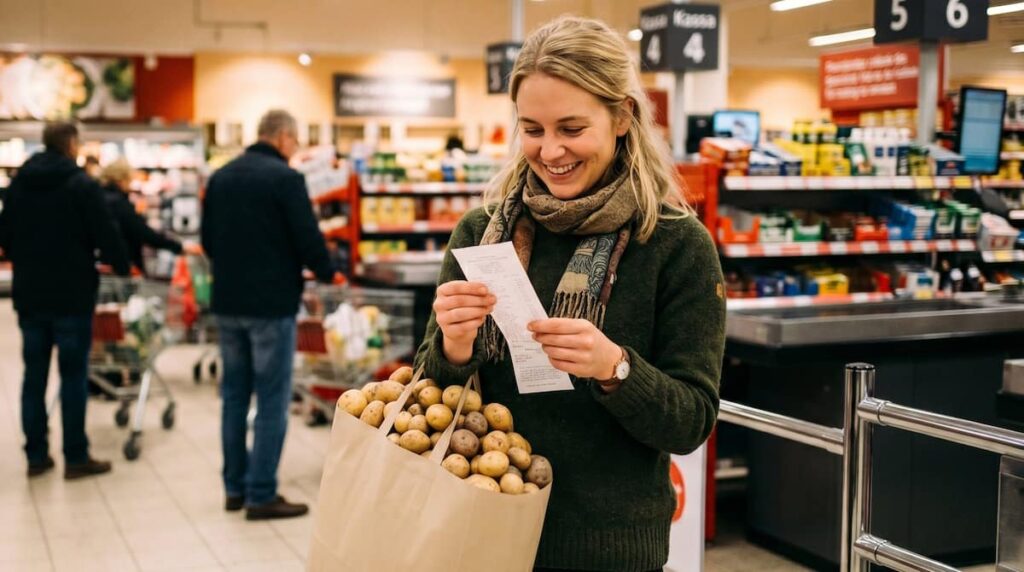
The current rule in the Price Information Act (PiL) requires businesses to state the lowest price over the past 30 days when offering discounts, a regulation originally introduced to prevent misleading pricing. However, for grocery retailers, this has led to difficulties due to frequent price fluctuations. The Simplification Council assesses that the current legislation entails socio-economic costs of approximately SEK 493 million annually. Of these costs, SEK 291 million burdens consumers and SEK 203 million burdens companies.
Civil Minister Erik Slottner comments on the challenge with the current regulation:
It is possible to report the lowest price on a pair of shoes over a 30-day period in a simple and clear way. But for example, the price per kilo of potatoes is more difficult. The prices of food are affected by factors such as the size of the harvest, the global situation and best before dates.
Due to uncertainties regarding which perishable goods are covered by the current exemption in the law, many actors are instead choosing other promotional forms, such as multi-buy offers or specific member discounts. According to the Simplification Council, this disadvantages certain customer groups, including single elderly people, students and families with children, and also risks leading to increased food waste. The requirements also negatively affect the opportunities to market price reductions in physical flyers.
A general exemption for food is estimated to be able to reduce the costs of grocery retail by SEK 146 million per year. As the rule is governed by the EU's Price Information Directive, the Council's proposal means that the Swedish government should primarily work to amend the regulation at EU level. A proposal from the Council to also exempt printed flyers from the rule was not considered compatible with current EU law.
Pending a possible amendment to the law within the EU, the Simplification Council proposes that the national rules be clarified. The clarification means that the exemption should cover:
- Goods that may become substandard for sale within 60 days of harvest, production or processing.
- Goods that have less than 30 days remaining to their best before date or use-by date.
This clarification is proposed to enter into force on February 1, 2027 and is estimated to save companies approximately SEK 37 million per year.
The requirement for a 30-day price has also previously proven to be difficult to navigate for Swedish retail in general. During analyses of e-commerce during last year's major campaign periods, more than one in ten stated 30-day prices were suspected of being incorrectly reported.