

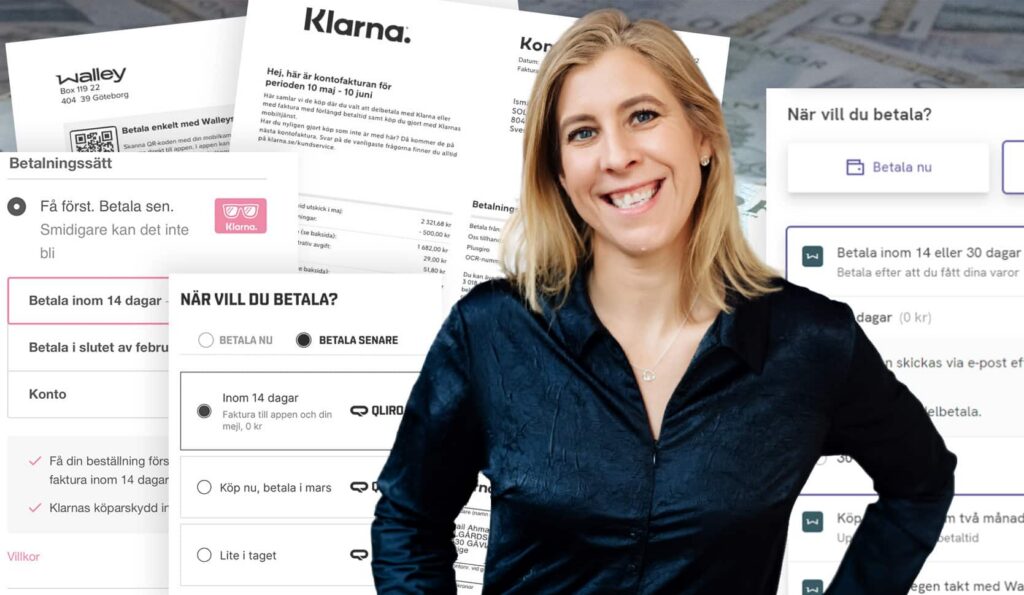
On November 20, 2026, the EU's new Consumer Credit Directive (CCD2) will come into force in Sweden. This means that payment methods such as "buy now, pay later" and interest-free invoices will come under scrutiny. E-commerce businesses offering these services will henceforth be classified as subsidiary credit intermediaries or lenders.
For e-commerce businesses, this means that the checkout process needs to be adapted.
Selling your goods, whether it's clothing, electronics, furniture or something else, is of course your primary business – but if you also help the customer finance the purchase, you may be considered a credit intermediary in the legal sense and therefore be affected by the new rules, writes Agnes Hammarstrand, e-commerce lawyer, in an expert article on Ehandel.se.
What is happening is that credit checks will now become stricter and more precise. Instead of a simple check, the seller must now collect detailed information about the customer's income, expenses and other debts. The consumer will have to answer more questions, which changes the quick click at checkout into a more demanding process.
The new rules include requirements for how credits may be marketed and what information the consumer should receive. Some information must be presented to the customer at checkout.
The law also requires that e-commerce personnel have knowledge of consumer protection in order to answer questions and guide customers regarding the credit agreements. However, how much responsibility e-commerce businesses will actually need to take in-house remains unclear for now. Payment companies may bear the brunt of the work and integrate both data collection and mandatory information directly into their ready-made checkout solutions.
Size Determines Review
How an e-commerce business is affected depends on turnover, staffing levels and the type of credit offered.
Companies with more than 250 employees and an annual turnover of over 50 million euros will fall under the supervision of the Swedish Financial Supervisory Authority (Finansinspektionen). A formal permit is then required to continue operations. The same applies if the company's balance sheet total exceeds 43 million euros. An application to the authority normally takes 120 days to process.
Smaller e-commerce businesses, and actors who only mediate credits without interest and fees, will instead fall under the supervision of the Swedish Consumer Agency (Konsumentverket). They do not have to apply for a permit from the Financial Supervisory Authority, but must still comply with the same rules at checkout.
Those who do not comply risk penalty fees of up to 50 million krona – or, in the worst case, criminal liability, writes Agnes Hammarstrand.
Possibility of Exception
There are exceptions for e-commerce businesses that would like to avoid the new Consumer Credit Directive.
If the store lends the money itself without involving an external partner, offers interest- and fee-free purchases and gives the customer a maximum of 14 days to pay, the law does not apply. A requirement is also that the invoice is not sold on to another company during the credit period.
Deadlines E-commerce Businesses Must Be Aware Of
The clock is ticking for actors affected by the permit requirement from the Financial Supervisory Authority. New e-commerce businesses that start their operations after November 20, 2026, and meet the criteria for supervision by the Financial Supervisory Authority, must have an approved permit in place before they can start offering the credits.
For already established actors covered by the permit requirement, there is a transition period. Existing companies must submit their application to the Financial Supervisory Authority no later than November 20, 2027, and may continue to offer invoice and installment payments while the application is being processed.
Smaller e-commerce businesses under the supervision of the Consumer Agency do not need to apply for a permit, as mentioned. But they are fully covered by the same regulations. This means that by November 20, 2026, when the law comes into force, all affected e-commerce businesses – regardless of size – must have adapted their checkout process, implemented the stricter credit checks and trained their staff in order to continue offering credits and invoice purchases.
Read more about the new Consumer Credit Directive at Finansinspektionen or Konsumentverket.