

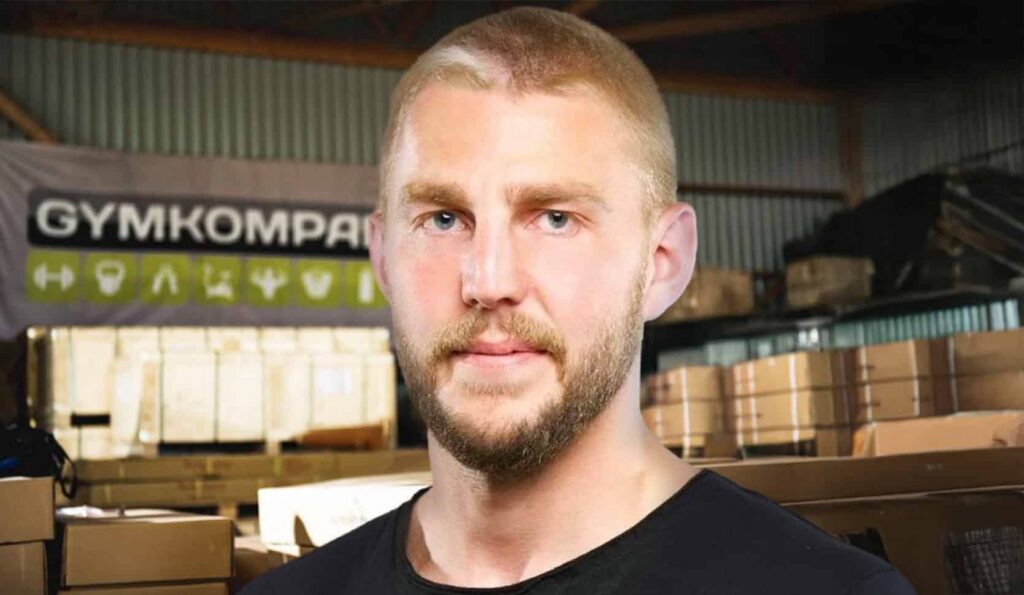
It is, to say the least, a special competitive situation that Joel Löwenberg, CEO of Gymkompaniet, highlights in a post on LinkedIn.
The company's largest competitor, Träningsmaskiner, has roughly the same turnover, but that's where the similarities end. The competitor is owned by the listed company Wesports, and therefore has financial muscle that makes them difficult to "starve out" and allows them to pursue an aggressive low-price and discount strategy.
To add insult to injury, Wesports also owns a couple of the wholesalers from whom Gymkompaniet purchases approximately 20 percent of its range.
When Ehandel.se reaches Joel Löwenberg, he explains how it actually works in everyday life to negotiate with a wholesaler whose owner is simultaneously trying to attract consumers with discounted prices.
It's a bit special, admittedly. You always look after yourself first, and if they have a choice, they will always favor themselves, which is not surprising. But we have a customer base, and they have their customer base. If we can find a win-win situation, we'll pursue it as long as we can,
says Joel Löwenberg to Ehandel.se.
He explains that Gymkompaniet sometimes manages to sell significantly larger volumes of specific goods than the wholesaler's parent company does itself.
They can benefit from our customer base, and we can benefit from some of their products. There are even products we buy directly from the factory, but are sold under their name. As long as both parties benefit, it's a positive thing.
Sees Through the “Brand Myth” for Occasional Purchases
Joel Löwenberg notes that a common reaction in the industry is not to engage in price wars, but instead to rely on the fact that “you win on brand in the long run.”
A naive reasoning when it comes to occasional purchases, he believes. Since gym equipment is often a one-time purchase, the customer encounters the e-commerce retailer once and never again. To think that you should “wait out” a price-warring competitor is the wrong approach.
The solution has instead been to consolidate the range – to buy larger volumes of 20 weight benches instead of offering 80 different ones – and a strong focus on own-brand, which today accounts for around 70 percent of sales.
Two Golden Rules for the EMV Transition
The journey towards own-brand has not been painless, however, and has been marked by both supplier conflicts and liquidity problems. Joel Löwenberg shares below his two most important lessons for other e-commerce retailers who want to make the same journey:
1. Be extremely transparent with your wholesalers
If we, as a large customer, suddenly start bringing in our own goods in secret, the supplier ends up in an absurd situation where they are left with a large stock. This forces them into a price war where they sell out without profit, and that's not what we want. We have always been very open with the wholesalers and said well in advance that “now we are focusing on our own benches or treadmills”. This allows them to adjust their purchasing volumes in time,
says Joel.
2. Don't fall in love with your own product specifications
The best advice is to never buy too much at once. You may think that your own product is 15–20 percent cheaper for the customer and better in every way, but if you don't have an established brand in that category, it may not sell at all. Many customers are very slow to change and stick to brands. You actually have to see that the product sells first.
B2B and Independent Gyms as a Shield Against Price Wars
Another crucial countermeasure against pure low-price players has been to build a strong moat within B2B. The company has focused heavily on more “complicated” customers such as municipalities, fire departments and companies, target groups where requirements for assembly, flexible agreements, payment methods and direct procurement weigh much more heavily than the lowest possible price.
Today, the B2B sector accounts for a stable backbone of around 35 to 45 percent of the company's turnover, depending on the season and quarter. Together with strong growth among smaller and independent gyms, this has given Gymkompaniet a stable platform that is less sensitive to the consumer market's sales frenzy.
It's a slightly more complicated customer group that often comes with very specific requests, but once you've met each customer's respective requirements, they are very nice to have as a base,
concludes Joel Löwenberg.