

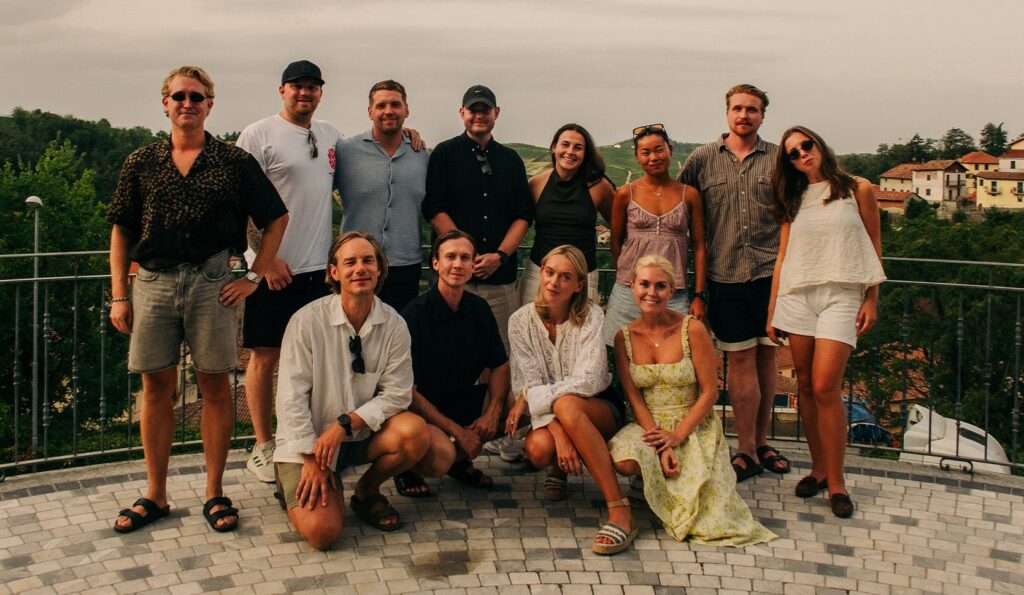
Today, Flowlife offers a broad ecosystem of products for recovery, so-called recovery tech, for home use. But when the business was launched, there was no ready-made plan for this. When asked if the vision of a complete range was present from the start, the answer comes quickly.
Honestly? No. In 2016, we had a massage cushion and a conviction: that recovery is not optional, says Lucas Wasniewski.
He explains that the assortment subsequently took shape by constantly evaluating what needs existed and how these could be solved outside of professional clinics.
The ecosystem grew out of a question we have asked ourselves with each new product since then: what does the body really need, and how do we make that possible every day, at home, without a clinic. The shift in mindset actually came during the crisis.
The crisis he refers to occurred in 2022. It was a time when the company was close to bankruptcy and forced to evaluate its entire business model to survive.
When we were forced to rebuild everything, we realized that the strength did not lie in any single product but in the system, that the therapies reinforce each other. That's when Flowlife truly became Flowlife. Without a doubt, 2022. We were close to bankruptcy, and the toughest part wasn't the numbers but the decisions they forced us to make: to admit that our old concept wasn't working, and to rebuild position, assortment and working methods from the ground up instead of just cutting costs and hoping.
The workforce was directly affected by the new direction.
The hardest thing of all was having to cut down on the team, saying goodbye to people who had been with us building the company and who had done nothing wrong. You carry those decisions with you. But it is also my most important lesson from ten years: a turnaround rarely involves working harder, but daring to change concepts when the old ones don't work.
The Road to 100 Million Kronor
Turning around the entire business from the ground up proved to be the right path.
When the company now presents its fresh annual report for the period 2025-01-01 to 2026-03-31, revenue exceeds 100 million kronor.
Net sales amounted to 105.5 million kronor, an increase of 124 percent compared to the previous year. The increase is explained by both business growth and the fact that the financial year comprises 15 months compared to 12 months in the previous year.
Even though the annual report covers 15 months, we continue to grow at a high pace. If we look at the rolling twelve months, we have actually already exceeded that revenue figure, says Lucas Wasniewski.
At the same time, profitability was strengthened and operating profit amounted to 15.2 million kronor, compared to 3.2 million kronor the year before.
When asked what was the biggest key to turning things around and reaching the dream limit, Lucas states:
Focus, and the team. We stopped trying to be everything to everyone and decided to really win selected categories, with red light therapy as the clearest example. But the real key is the group of people who have done the job.
In connection with the restructuring of the business model, the internal working method also changed. The crisis has left behind a completely new work culture within the company.
We who are involved today really see ourselves as an elite team: everyone owns and is responsible for their area, everyone is constantly developing, and everyone knows that we win together. If you combine that with discipline on margins, inventory and cash flow, and the courage to simultaneously invest in brand and partnerships, then profitable growth is not a choice between two things but the result of both.
To mark the tenth anniversary, the company is currently running an intensive launch campaign. For ten weeks, the e-retailer will release as many new products on the market. This is a fast pace that puts the new organization and internal systems to the test.
When asked how they manage the rollout, the CEO points again to the staff and careful preparations.
It's a substantial operational challenge, but it's built for it. Three things make it possible: careful planning well in advance, an AI-first approach throughout the company that allows a small team to execute like a large one, and above all an incredibly competent team that has done this before. Every launch in recent years has built that muscle. And that may be what we are absolutely best at as a company: creating really good products and launching them.
The Elite Opens Doors Globally
An important piece of the puzzle in the company's marketing strategy has been to build relationships with elite athletes. Instead of traditional sponsorship agreements, the company has chosen to invest in athletes who actually integrate the products into their daily lives.
This choice has in turn left clear imprints on the e-retailer's growth and economy. When we ask about how crucial these collaborations have been for the company's success, the CEO believes the effect is significant.
A lot, but perhaps not in the way you think. The direct sales effect is fine, but the real value is that the elite acts as proof. When professionals choose our products of their own free will, the threshold for everyone else is lowered, the recommendation becomes our growth engine and our marketing cost per customer goes down. We also build the partnerships long-term, with genuine commitment rather than classic sponsorship, and you can see that in how the athletes actually use and talk about the products.
The ambassadors have not only driven sales, but have also served as a key when the brand has tackled the international market.
Lucas Wasniewski explains that the elite's stamp of quality opens three specific doors for the company when establishing itself in new countries and with new retailers:
Retail: when we entered John Lewis in the UK, the credibility from elite sports was a clear part of the conversation. Markets: an international athlete opens his home market and his followers' markets in a way no media budget can buy. And talent and capital: people want to work with and invest in brands that the elite has already chosen.
As the company now enters its next phase, its sights are set on gaining market share internationally.
We continue to maintain focus. More really good products, continue to grow in the domestic market which is and remains our base, and in addition add a few new strategic markets where the UK is the one we are investing most in right now, we are already at John Lewis, Currys and Boots. In addition to that, we enable deliveries globally combined with a broad performance marketing carpet. The big shift is that we are seriously starting to compete on a global level, with humility about how much work it takes, but with a team that has shown that it can be done.
Flowlife is now celebrating ten years since its start, but when Lucas Wasniewski is asked where the company will be in another decade, the focus is on customer satisfaction rather than just revenue volume.
The world's most recommended recovery brand. Not necessarily the biggest, but the brand that most people recommend to someone they care about, because that's the only metric you can't buy. And hopefully I and the founders are still around and having as much fun as we are now. Ten years in, we've barely begun, he concludes.