

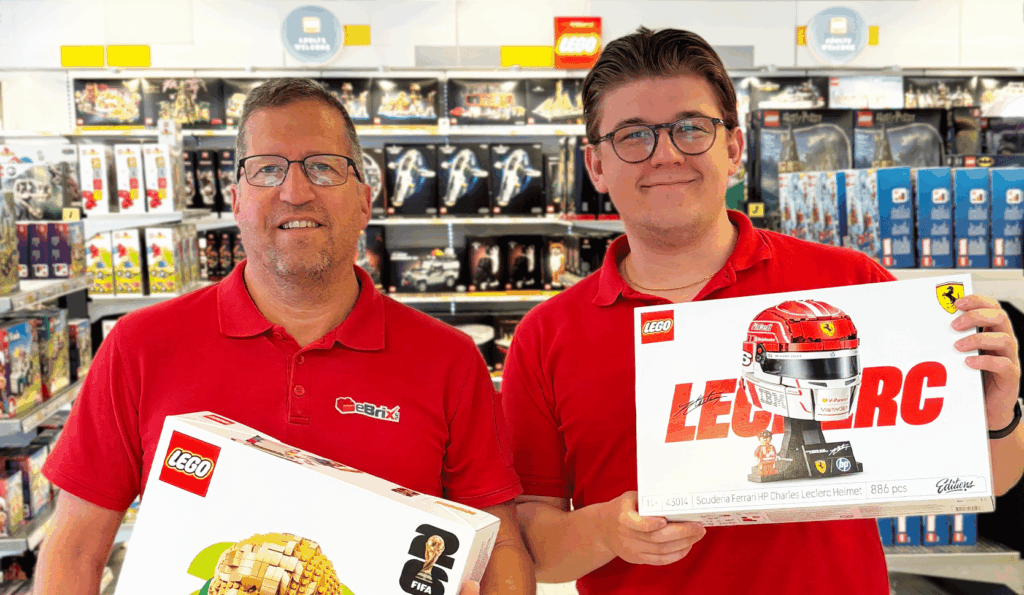
The annual report for 2025 shows that growth is sustained. During the year, revenue landed at SEK 33.5 million, an increase of 2.2 percent. The company's operating profit increased simultaneously by a full 21 percent and stopped at SEK 2 million. Lucas Lilja explains that the road to get there has required a lot of adaptation and evaluation of the business.
The changes have led to the company now feeling they have a firmer foundation to stand on. Collaboration with the main supplier has also been strengthened.
To summarize, 2025 has been the year that Ebrix regained its foothold in the market after several years without a clear direction. We have further realized the importance of actively working with internal control over current finances and we have a clear common plan that we work towards and communicate to our customers. This work has allowed us to make risky investments in, among other things, our new B2B program for corporate clients as well as a completely new image on social media, constructed entirely in-house.
Collaboration with the Lego Group has never been this good during our 15 years, which we see as proof of our hard work and dedication to the product. So far, the surprise has been mutual. Partly from our side over what a strong supplier relationship can lead to, but also from the Lego Group over how much a store on the outskirts of Örebro can generate in revenue. We hope that continued collaboration with headquarters in Denmark will eventually mean a better value proposition for the customer, as well as better profitability and opportunities for Ebrix.
In a toy industry largely driven by major players, it quickly becomes a question of survival for smaller e-retailers to find their own niches. For Ebrix, this has meant actively working to identify unique niches where the company can offer added value that large-scale competitors struggle to replicate.
We are well equipped to now take the work with profitability to the next level and focus on new business areas, value propositions, and in the long run focus on real growth. The market for Lego in 2026, and probably for the foreseeable future, is a free market at its best. Large players with economies of scale meet smaller players who are forced to differentiate themselves and offer customers new solutions and value.
For us, the most important thing has been to find and understand our place in the market. When cost leadership and price competition have become increasingly difficult, we have instead worked with the extended range and complementary products such as older collector's models and spare parts, while exploring completely new business areas such as planned investment of exclusive Lego models, and a new service for B2B customers to increase product turnover, says Lucas Lilja.
Growing Inventory As A Competitive Advantage
One of the more unconventional paths the company has chosen is to consciously tie up capital in a large inventory of goods. During 2025, the value of the inventory increased by over 14 percent and amounted to SEK 6.5 million at the end of the year. This move is based on the conviction of always having the right product on the shelf, so as not to disappoint a potential customer when a specific building kit is requested.
In school, you learn about concepts such as "Just In Time", capital tying and inventory turnover rate. These are good measures of financial health. But as in many other industries, these are not unambiguous measures, but part of a larger balancing act. For us, the increased value of the inventory has been crucial to maintaining our position and relevance in the market, says Lucas Lilja and continues:
Had Ebrix had an increase in inventory value as its only goal, we would have been doomed to fail. It is, simply put, about having the right product on the shelf and knowing the market and the individual customer. The consumer today is increasingly knowledgeable about Lego and selective regarding their specific preferences. If we get new products for sale just a few hours after the official release, we risk becoming completely irrelevant to many customers. This is one of the characteristics of the market that we are well aware of and accustomed to, but which constitutes a threshold for new players, especially smaller companies.
He further points out that the strategy requires precision and that the work will continue.
These factors mean that we have been forced to continue, in a thoughtful way, investing in and building up the inventory – a job we have no plans to stop doing. The thoughtful work with internal finances, placements and building up of inventory is one of several ways we can differentiate ourselves from retailers whose range is not complete. It's a battle to always have the most popular products on the shelf, while we must always take into account the risk of investing in batches that turn out to be less profitable.
Corporate Customers Open New Doors
In early 2026, the company launched its new platform aimed at corporate customers. The reception has been beyond expectations, according to Lucas Lilja.
The launch of EbrixB2B.se has so far been exciting and above all very educational. The launch is essentially about a spontaneous and irregular side business now becoming an important engine in the business, he says.
That the step to corporate sales was timely quickly became clear. It wasn't long before interest took off seriously, which now places new demands on how the e-retailer handles its internal flows and processes.
In just a few weeks, we have received many more interested parties than we counted on, and orders have already started coming in. Now it’s about transferring the experience regarding logistics, communication and customer contact from trading with consumers to trading with companies. So far, we have discovered that our knowledge and experience with the product and the Lego brand gives us a good position to grow in the B2B market. I see very optimistically on the new business and we are already preparing for the real potential; Christmas shopping 2026.
The increased volume from the B2B part is also expected to create ripple effects for the ordinary consumer business.
Something we have discovered, which was not a driving motivation in the investment in B2B, but has proven to have a positive effect, is how the new business affects our position towards our consumers. The fact that Ebrix turns over more Lego through trade with other companies gives us the opportunity to take greater risks, invest more in the store in Örebro and over time give us better opportunities for price competition, says Lucas Lilja.
"Not A Magic Tool"
By reducing traditional advertising and instead letting Lucas Lilja act as a front figure under the name "Lego-Lucas" on social media, the company has found a more cost-effective marketing channel.
In fact, the profit increase of 21 percent is thanks to several changes, including better planning and follow-up of finances, more thoughtful investments and risk-taking as well as more cost-effective marketing. We see that the new thinking and these new initiatives will over time mean good profitability for the company. Specifically, we conclude that the more efficient marketing has contributed with a six-figure cost saving, while exposure and visibility for the company have increased.
It should be clarified that social media is not a magic tool that necessarily can save all types of businesses hundreds of thousands of krona per year. It is a very direct way to communicate your message and value proposition to the customer, by creating value in itself in the digital content. Entertaining Lego enthusiasts on social media has undoubtedly been a successful recipe for Ebrix and is a very important part of the work with profitability, says Lucas Lilja.
Creating one's own voice has become a way to stand out from the crowd.
In an established market, with established competitors and a single established supplier, it is not only helpful but absolutely necessary to be able to differentiate oneself. Reviewing Lego builds dressed in different characters is an example of this. There are several advantages to social media being the engine behind image and outreach. Partly it is much more cost-effective than other media, partly visibility on social media can give a two-way effect when we have the opportunity to listen to and converse with the consumer, he says.
Strong Balance Sheet For The Future
The improved profitability is also reflected in the company's balance sheet. During the past year, equity increased, and solvency rose by 26.2 percent to land at 53 percent. With a more stable financial foundation, the e-retailer now turns its gaze towards taking the next step in its development and rolling out last year’s initiatives on a broad front.
It is one thing to return to profitability after the pandemic, inflation and competitive pressure. Now it's about growing market share and securing the future of the company and brand. Ebrix has a clear internal plan for growth and continued profitability, where continued reinvestment in inventory over the coming years is part of the strategy, says Lucas Lilja and continues:
The store in Örebro remains the heart of the business. Major investments in the form of Lego museums, exclusive products, a wide range of Lego spare parts and competent staff increase the value for customers who visit Ebrix this summer and during Christmas shopping, and mean better profitability for the company.
That the company’s solvency has now climbed above the 50 percent mark further builds stability ahead of the upcoming investments. The e-retailer emphasizes, however, that this key figure was not the primary goal during the restructuring work, but rather a positive outcome of the strategic choices made along the way.
Solvency passes 50 percent for the first time in over 10 years. It wasn't a set target at the beginning of the year, but it’s further proof of our work with cost savings, efficiency and that every investment should contribute to increased profitability in the long run. It is a figure we are very proud of, while we have other goals regarding profitability, growth and reinvestment in inventory.
Even though the sights are set on growth, daily operations are rarely completely frictionless. The company operates in a market that constantly demands adaptability, where external factors and global disruptions regularly test logistics.
The market is still pressured by major players, customer expectations are higher and the outside world’s impact on the supply chain is greater. These are challenges that Ebrix handles daily in one way or another. Deliveries that are incomplete due to production obstacles and unpredictable sales are everyday occurrences, but over time Ebrix becomes better and better at adapting. One thing is clear; Lego and Ebrix are here to stay, concludes Lucas Lilja.