

On Tuesday, Ingka Group, which operates the majority of the world's IKEA stores, presented its annual overview for the financial year FY26, covering the period from September 1, 2025, to August 31, 2026. The group's total revenue amounted to 41.4 billion euros, a marginal decrease from 41.5 billion euros the previous year. For the core business, IKEA Retail, revenue landed at 38.8 billion euros compared to 39 billion euros the year before.
Despite largely unchanged revenue and continued price reductions on hundreds of products, the company shows stable sales volumes and a clear improvement in results. Operating profit increased to 2.2 billion euros, up from 1.4 billion euros the previous year. Net profit increased during the same period from 1.4 billion euros to 1.9 billion euros.
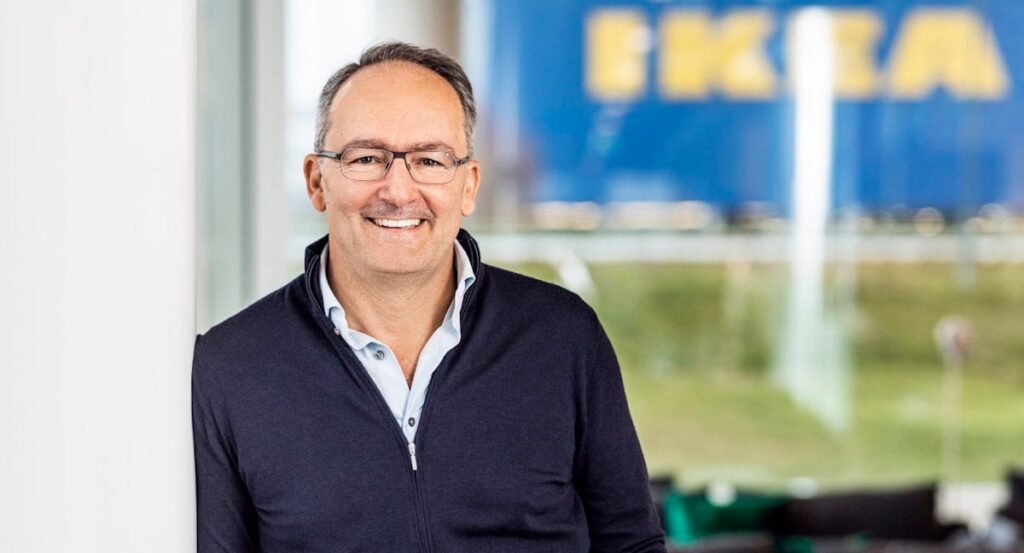
During a year of continued pressure on household finances, we maintained our focus on making IKEA more affordable, accessible and sustainable. Thanks to the work of our employees, we continue to improve operational efficiency and reduce our costs in order to be able to lower prices for customers, says Juvencio Maeztu, CEO of Ingka Group.
Continued Shift Towards Digital Channels and AI Logistics
The annual overview shows a continued shift in how customers choose to interact with the furniture giant. The number of visits to physical stores decreased during the financial year to 729 million, down from 739 million the year before. At the same time, the number of online visits increased from 4 billion to 4.2 billion.
To meet the growing digital traffic and streamline the supply chain, Ingka Group acquired the AI-powered logistics technology company Locus during the financial year. The acquisition aims to make e-commerce and home deliveries more efficient. The group has also continued to invest in digital planning tools and fulfillment solutions, while the physical store network has been supplemented with 28 new smaller stores and 64 planning studios.
This structural transformation has also been noticeable in the Swedish market during the autumn. In October, Ehandel.se reported on how IKEA is implementing logistics changes in Sweden to adapt the flows to smaller, city-near units and growing distance trading. The group is also working to expand its digital presence globally through social commerce, which has resulted in the company recently opening a store on Chinese TikTok.
Second-hand Marketplace Grows in Europe
Another part of the group's digital investment is the rollout of its own peer-to-peer marketplace for used furniture. During the past financial year, the platform was launched in Sweden, Poland and Belgium, which means that the service is now active in a total of six markets. Ehandel.se already wrote in January about when IKEA launched its marketplace for used furniture in Sweden as part of integrating the second-hand market into its own digital ecosystem.
Going forward, Ingka Group plans to continue combining price reductions with an expansion of both digital and physical touchpoints to reach more customers, even if it may squeeze margins in the short term.
Our priority is clear: to make IKEA more accessible and affordable for the many people. We have made a significant investment in lowering prices on hundreds of products and will accelerate expansion to bring IKEA closer to more people. Keeping prices low is a long-term commitment that reflects our promise to stand on the side of the many people when they need it most, even if it means accepting a lower margin, says Juvencio Maeztu.