

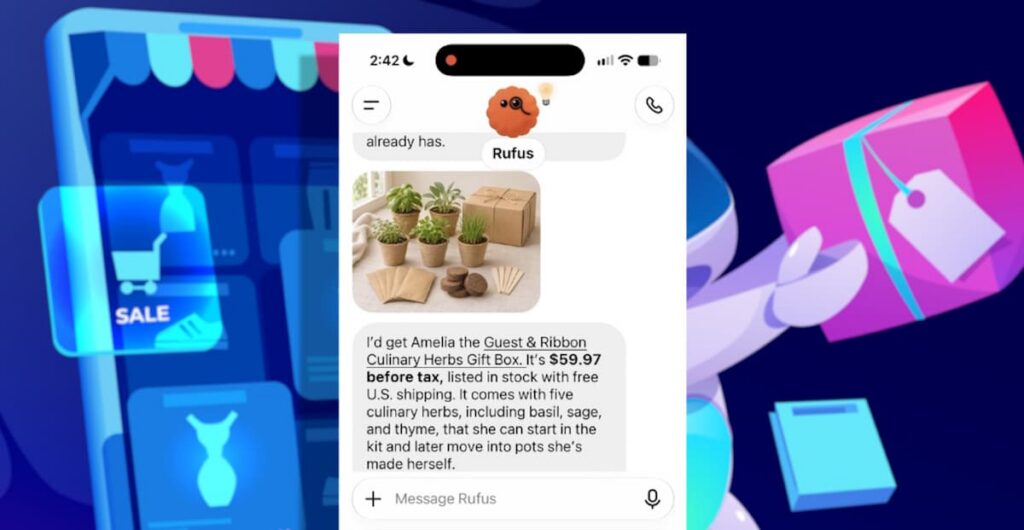
On Friday, OpenAI presented its new payment solution, ChatGPT Wallet. The service allows the company's AI agents, internally referred to as "dots," to not only assist consumers with product selection but also complete the entire payment in e-commerce checkouts.
The launch is a direct continuation of the initiative that began in the spring, when the company began rolling out e-commerce on a large scale in ChatGPT for its now total of 1.2 billion weekly active users. In the first phase, the wallet will be available to a limited number of ChatGPT Pro subscribers in the USA with cards linked to Visa, Mastercard or American Express.
Tokenization and Biometric Requirements
A clear bottleneck for agentic commerce has historically been trust at the time of payment. Surveys that Ehandel.se has previously reported on show that consumers are happy to use AI tools for product searching and price comparisons, but that they hesitate to relinquish control at the checkout.
To address the security issue, OpenAI has built the payment flow around strict authentication and tokenization. The user registers their payment card once in the wallet. Before each individual purchase, a compilation of the shopping cart, total amount and which card will be charged is presented, whereupon the customer must approve the transaction biometrically with, for example, facial recognition or fingerprint scanning.
Once the purchase has been approved, a unique payment token is generated that replaces the actual card number during the transaction. This means that neither the AI agent nor the receiving e-commerce retailer has access to the customer's actual card details. According to OpenAI, the consumer retains their ordinary card benefits such as bonus points and complaint protection, while the e-commerce retailer retains the direct customer relationship as well as control over pricing, delivery terms, returns and customer service.
Together with OpenAI, we are bringing the security, safety and control that American Express payments offer to new AI-powered shopping experiences. ChatGPT Wallet is our first integration with American Express Agentic Commerce Experiences. It allows qualified card members to use their Amex card while reviewing and approving each purchase, says Luke Gebb, Vice President and Head of Global Innovation at American Express.
In the future, OpenAI plans to expand the wallet with more automated features. Users will then be able to pre-set fixed spending limits, specific product categories and time frames within which the AI agent is allowed to make purchases completely autonomously without manual confirmation each time.
Encourages Merchants to Let Bots In
In addition to the consumer wallet, OpenAI also published a technical guide for online stores on Friday, called Commerce Partner Playbook. A central obstacle for AI agents that want to shop online today is that many e-commerce retailers' firewalls and fraud systems are configured to automatically block all bot traffic in the checkout flow.
The question of whether external AI agents should be allowed into online stores is currently dividing the market. While giants like Amazon have actively chosen to block external AI agents in order to steer customers to their own assistant Alexa, OpenAI argues that e-commerce retailers who exclude the agents risk missing out on sales.
To ensure that legitimate agent purchases are not rejected by security systems, OpenAI has entered into technical collaborations with payment providers such as Adyen, Checkout.com and Stripe, as well as actors in fraud protection such as Forter, Riskified, Sardine and Signifyd. The goal is for the checkout systems to be able to distinguish between malicious bots and verified AI agents acting on behalf of an identified customer.
Open Protocols are Emerging
In its new handbook, OpenAI also encourages e-commerce retailers to make structured product flows available and implement support for web-based MCP tools (WebMCP). This is based on the same basic idea of open agent interfaces that was recently used in the Swedish market, when Inet and Swish completed Sweden's first purchase with an autonomous AI agent via the MCP protocol.
By connecting to these types of interfaces, e-commerce retailers can allow external AI agents to communicate directly with the store's inventory, pricing and checkout, without the agent having to navigate visually on the website like a human visitor. When OpenAI plans to roll out ChatGPT Wallet to markets outside the USA has not yet been communicated.
ALSO READ: So many AI orders has Inet received