

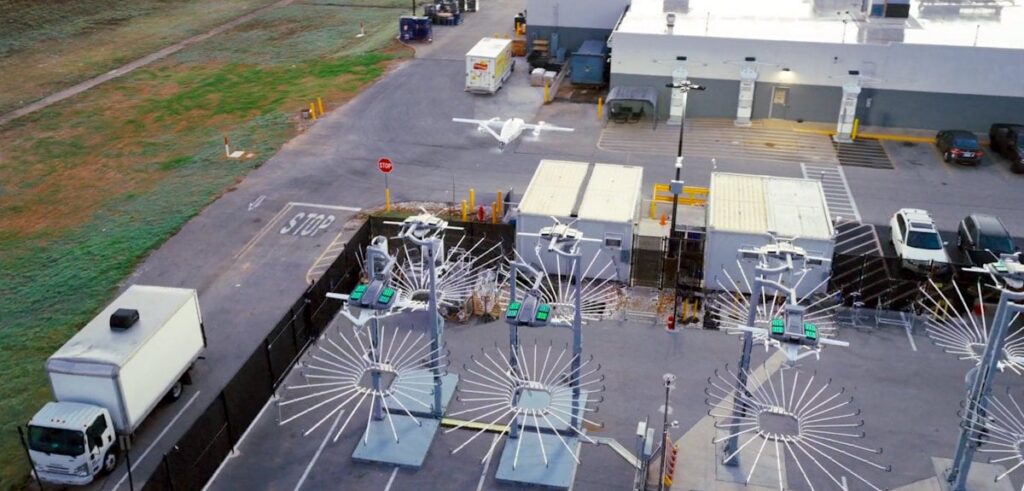
Drone deliveries within e-commerce and retail are now taking the step from local test projects to large-scale infrastructure. The American logistics company Zipline recently announced that it has raised $1.5 billion, equivalent to almost 15 billion Swedish krona, in a new funding round. The capital injection gives the company a valuation of $21.5 billion after the investment is completed, in a round led by Paradigm, WCM Investment Management and Layer Global.
The funds will be used to scale up both manufacturing and operational operations to establish a nationwide network for drone deliveries in the USA. In connection with the capital round, a new multi-year agreement with retail giant Walmart was also announced, which is now adding 300 new locations for drone deliveries across the country.
Millions of Deliveries in a Short Time
The new expansion builds on Walmart's existing drone program, where demand for fast home deliveries has grown rapidly during the year. As recently as May 2026, the chain surpassed one million completed drone deliveries, a figure that has now doubled to over two million packages delivered directly to customers' homes.
For e-commerce consumers, this investment means that smaller everyday orders can be delivered much faster than with traditional delivery vans. The system is primarily used for goods that the customer needs immediately, such as over-the-counter medicines, forgotten cooking ingredients, snacks or smaller household products.
Lowers the Package with a Line
A central part of the upcoming expansion is Zipline's new delivery system Platform 2, also known as P2 Zip, which has been developed specifically to function in densely populated residential areas. The drone flies at a speed of approximately 110 kilometers per hour at just over 90 meters altitude and can deliver packages weighing up to just under four kilograms within a radius of 16 kilometers. The actual transport time from store or hub to consumer is often around 10 minutes.
To solve the challenge of safety and noise during the actual delivery, the main drone never lands on the customer's property. Instead, it remains in the air at a high altitude and lowers a smaller, autonomous delivery robot on a line. This so-called droid is equipped with its own small propellers and sensors that allow it to quietly and with high precision steer the package to a specific location, such as a patio, driveway or garden table. When the package is delivered, the unit is hoisted up again and the drone flies back to its base.
Increasing Competition in the Airspace
The development shows how more and more major players see the airspace as the next crucial step to reduce lead times, reduce emissions and streamline the last mile of the supply chain. As Ehandel.se previously reported traditional postal and logistics players are also exploring electric air transport in a commercial environment to speed up flows between logistics hubs.
In direct deliveries to consumers in the USA, Walmart and Zipline's offensive represents a direct challenge to e-commerce giant Amazon and their Prime Air initiative. Amazon has invested significant resources in rolling out its own delivery drones of the MK30 model, but the initiative has at times been marred by incidents and regulatory reviews that have forced the company to temporarily halt deliveries. With new billion-dollar capital and 300 new hubs on the way to being rolled out, Walmart and Zipline are now taking a firm grip on the market for airborne fast deliveries.