

For the first time since spring 2024, the Chinese e-commerce app Temu is no longer among the three most popular online stores for Danish consumers. According to a new report for the third quarter, presented by the Danish industry organization Dansk Industri on Monday, Temu falls back to tenth place in the Danish market.
Dansk Industri directly links the decline to the changed rules for direct imports from countries outside the EU. While low-price imports from Asia are losing momentum, a clear growth is visible in circular commerce on the Danish market. The platform Vinted, which focuses on the sale of second-hand goods between private individuals, has climbed to second place on the list and now only has Zalando ahead of it. According to the measurement, 28 percent of Danes have shopped from other private individuals online during the last month, and in the age group 18 to 30 years, the corresponding figure is 44 percent.
Two new surcharges in four months
The reduced interest in directly imported small packages occurs in the wake of several regulatory changes within the EU during the year. On July 1, the previous customs duty-free limit of 150 euros for shipments from third countries was abolished. Instead, a fixed flat-rate duty of 3 euros per product group was introduced for all low-value packages sent directly to European consumers.
A package with a pair of socks and a mobile phone charger will therefore incur a fee of 6 euros, while a package with three pairs of socks will incur a fee of 3 euros, explains Swedish Consumers.
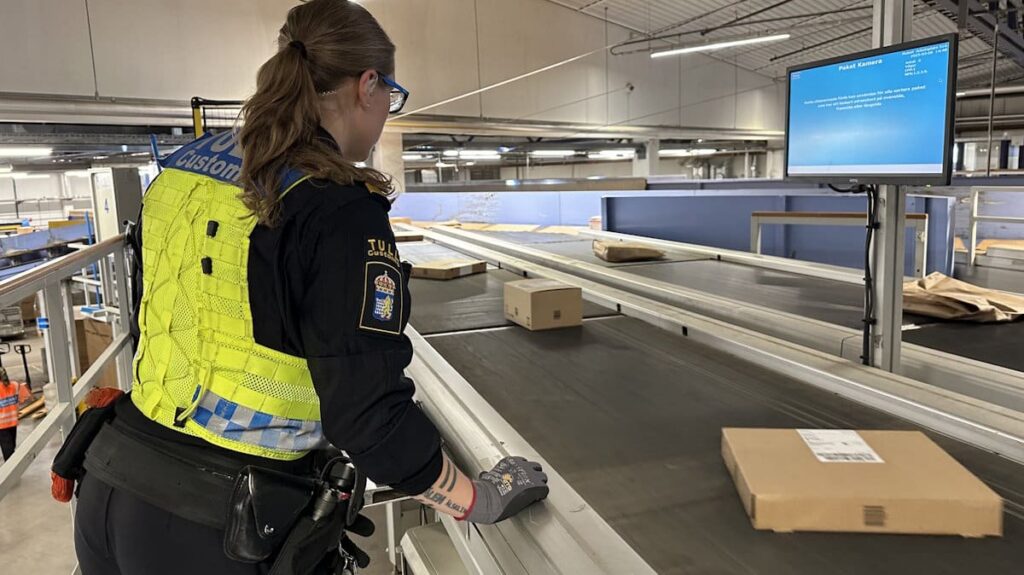
On Sunday, at the turn of the month to November, a EU-wide handling fee of 2 euros per package was also activated, which is added on top of the customs duties. The fee is intended to cover the increased administrative costs of customs authorities for border controls and represents a further increase in cost for smaller orders from platforms outside the union.
Clear slowdown in both Sweden and Germany
The development in Denmark is in line with similar measurements in other European markets following the summer's rule changes. In Sweden, Swedish Trade's E-commerce Indicator for September showed that the share of imports from China in Swedes' foreign purchases fell to 17 percent, which marks a clear trend break compared to the previous year.
Even in Europe's largest e-commerce market, strong effects are visible in the statistics. According to the German industry organization bevh the total turnover of Asian platforms such as Temu, Shein and AliExpress decreased by 35 percent in Germany during the third quarter after the duty-free allowance was removed.
Adjusting to local logistics in Europe
To meet the higher costs at border crossings, a comprehensive restructuring effort is now underway at Temu. The company is actively working to change its business model in the European market by moving more of the sales and logistics within the EU's customs wall. The goal is to eventually have more than 80 percent of European turnover go through locally registered sellers and European distribution warehouses, which means that the goods do not hit the rules for directly imported small packages with each individual consumer order.
In parallel with the recently introduced package fees, the EU is continuing to work on the next step in its overall customs reform. The upcoming regulations are expected to make foreign e-commerce platforms formally and legally responsible as importers when selling to EU consumers. This means that the platforms themselves must guarantee both correct payment of duties and VAT, as well as that the products meet European product safety requirements before reaching the end customer.