

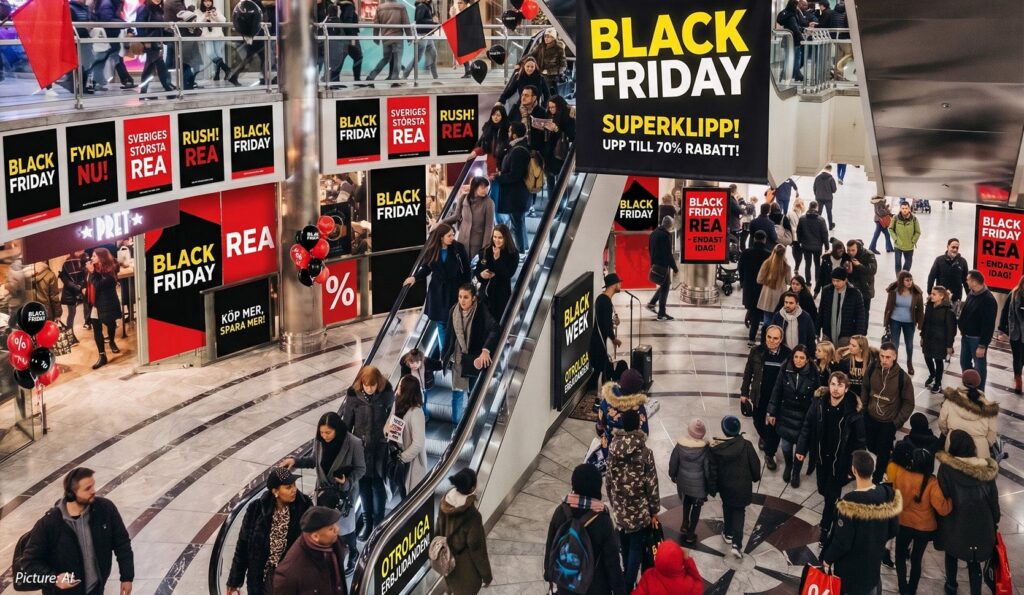
Exactly one month remains until the year's biggest shopping day on November 27th. And the 30-day threshold is not just a milestone in the countdown; it is crucial for determining what prices retailers can actually call a sale.
According to the price information law, stores that advertise a price reduction must state the lowest price at which the product has been sold in the last 30 days as a reference price. This means that the prices valid from today set the bar for what can be called a discount on Black Friday, while prices from late summer and September fall completely outside the legal window.
September prices are erased from memory
According to a recent analysis of over 1 million prices, the shift is impacting the market. In nearly 4 out of 10 cases, white goods and TVs were cheaper in September than at the end of October, with the price more than 10 percent above the September price.
For TVs, 37 percent of prices are higher today than in September, and for white goods, the figure is 35 percent. For e-commerce retailers, this means that on Black Friday they can set a discount down to a level that the item already had in September, perfectly legally.
Rarely about stealth price increases
Bartek Szkurlat, founder of Prisgrisen, emphasizes however that the price differences rarely depend on retailers deliberately inflating prices before the shopping weekend:
It's usually not about price increases, but about September campaigns ending. Only about 5 percent of the prices of stoves and refrigerators are more than 10 percent above the item's highest price in September.
For the consumer, however, the effect is the same. When the sale hysteria kicks off at the end of November, a labeled super discount may in practice correspond to the same price that applied during late summer.
Increased skepticism among consumers
The report comes as consumer distrust of Black Friday continues to grow.
Fresh figures from payment giant Nets show that 62 percent of consumers feel deceived by the retail sale prices during the campaign week, an increase from 46 percent five years ago.