

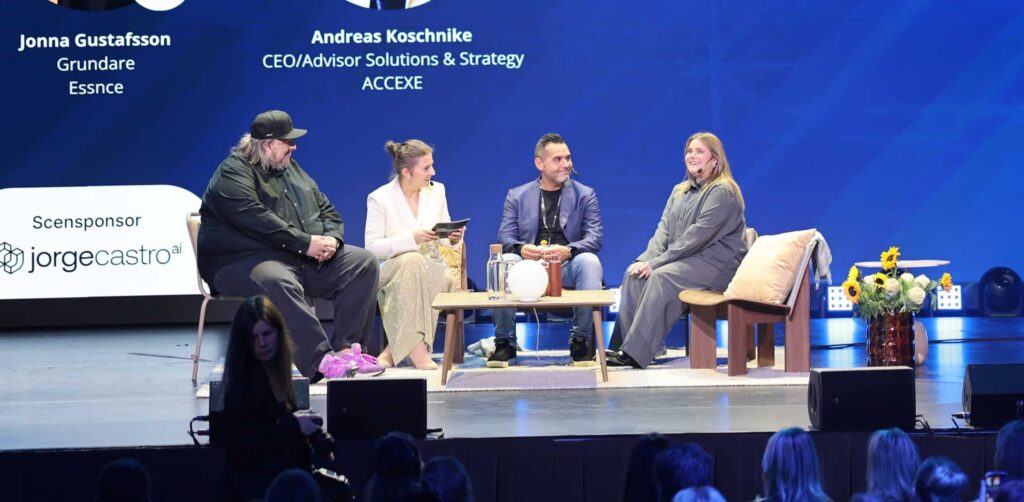
How do you actually get consumers to camp outside physical stores or frantically hit the refresh button in their browsers until servers overheat? When Izabella Borowska, editor at Ehandel.se, gathered three experts on high-octane launches on stage, it quickly became clear that the work behind an extreme sales peak begins long before the product is even available for purchase.
On stage were Jonna Gustafsson, CEO and founder of the perfume disruptor Essnce, Eddie Hernandez, Marketing and E-commerce Manager at electronics giant Power, and Andreas Kochnike, E-commerce Manager at Acne Studios and serial entrepreneur with extensive experience in limited product releases.
Three Million in Twenty Minutes
According to the panel, simply slashing prices is rarely enough to create mass hysteria. Instead, it's about methodically building a brand and a sense of FOMO – the fear of missing out on something unique.
For us, it's been about building a brand that people want to associate with and meet. Whether it's our pop-up stores we're opening this Friday, or our advent calendars, or our new launches, it starts well before the launch day and builds something people don't want to miss, says Jonna Gustafsson.
Eddie Hernandez at Power agrees and emphasizes the importance of starting to engage the target audience well in advance of a campaign to maximize pressure when the doors finally open.
For us, it's also about starting to tease early that something is going to happen, whether it's liveshopping where we might generate three million in twenty minutes, or store openings, or a product launch. I think you have to build a desire for something that might be interesting before it goes live, because then you can hype the FOMO, says Eddie Hernandez.
From Jens Lapidus to Furious Sneaker Buyers
But when the desire becomes extreme and products sell out in no time, another dilemma quickly arises. Sought-after goods often appear on the secondary market at double the price, while the most loyal customers risk being left empty-handed and feeling betrayed.
Andreas Kochnike has seen the downside of the coin firsthand during his earlier years selling limited items within a multi-brand environment.
I think you have to be careful and not milk your audience or community too much with it, because there's a lot of backlash. Of course, we've reached where we are today, it's a growth engine, but I think you have to be a little more careful today and not overexploit it either. My previous experiences were when we sold a sneaker for a thousand or fifteen hundred kronor and then on the secondary market it could cost thirty thousand. Of course, there was an outcry if you canceled an order because you had oversold, when they had already sold it, says Andreas Kochnike.
Jonna Gustafsson points out that customer anger also hits a pure D2C brand harder than a retailer selling external brands. If a Nike shoe sells out at a retailer, customers direct their frustration at Nike, but if Essnce sells out, it's Jonna and her own brand that take the heat for the dissatisfaction. At the same time, the company chooses not to limit the number of products per customer, as the proportion that is actually resold is negligible and they don't want to prevent customers from shopping for a friend.
Sometimes, however, it is almost impossible to predict how high the demand will be. Eddie Hernandez tells about when Power wanted to reach Generation Z on Tiktok just over a year ago. The company created an orange fur shoe with two built-in power banks called "Low-fers," and marketed it with everything from sports profiles to author and lawyer Jens Lapidus.
When we finally released the shoe for sale, it sold out immediately. I think it was two days, we had sold several thousand. It was a luxury problem, but if we had known it would be so hyped, we would of course have had many more. But two thousand shoes, three thousand shoes seemed like an extremely large volume to us, but apparently it was far too little, says Eddie Hernandez.
The Nightmare When Technology Fails
When thousands of eager consumers rush onto the site at the same time, the technical infrastructure is also put to the ultimate test. For Jonna Gustafsson and Essnce, the nightmare became a reality recently in connection with this year's release of advent calendars.
I don't want to throw our payment provider under the bus here, but we released advent calendars this year and the sync to our site didn't work. Customers could pay but we hadn't received the money, and the payment provider had the money. You sit with a lot of power with your suppliers there. In the warehouse I can go out and pack, but I'm too bad at that so I can't solve the problem. And it's really tough, says Jonna Gustafsson, who adds that the situation was fortunately resolved for customers in the end.
Power has also experienced technical cold showers, including during Black Friday three years ago when a targeted attack knocked out several major players in the industry. Since then, the chain has secured its systems tightly and has a clear rule: never launch major IT or e-commerce projects close to a peak period.
For those who want to avoid the site or checkout crashing when it matters most, Andreas Kochnike has a practical piece of advice in dialogue with his system suppliers.
Start talking to your suppliers and IT team early, set expectations for the type of traffic you think you're going to get. And then you have to put a large liability clause in the contracts, then they usually wake up, he says.
Advice to Smaller E-tailers: “Copy with Pride”
Towards the end of the conversation, a question was raised from the audience about how to think as a smaller brand without a large following or deep marketing pockets, where there is a risk that you invite people to a party without anyone showing up.
The panel agreed that smaller players must first build the foundation, create a unique product and preferably join forces with other players who already have the traffic. But you also don't need to make it more difficult than it is.
I don't think you need to reinvent the wheel, but I think you can find something that someone has done well, copy it straight away and maybe make it a little better. You don't need to make it more difficult than it is. If something works for someone else, it might work for you, but of course you have to twist it a bit to fit your brand, says Jonna Gustafsson, who immediately receives support from Andreas Kochnike who adds the motto “copy with pride”.
In conclusion, the trio sent their most important takeaways to e-tailers planning their next major product launch. While Jonna Gustafsson advocates "back to basics" and solid brand building, Eddie Hernandez encourages the industry to dare to test, make mistakes and learn quickly. Andreas Kochnike also reminds us to think beyond the launch day itself.
If you have that special item or a mini-collection when you release it, and you get a lot of traffic where it sells out: have a plan for how you take care of that traffic when it's over. Do you want to capture the customer in some way with email or retention, or are there other products around that they might discover? Take advantage of the opportunity, not just that one product. It's a spice, you can't live on it every day, concludes Andreas Kochnike.