

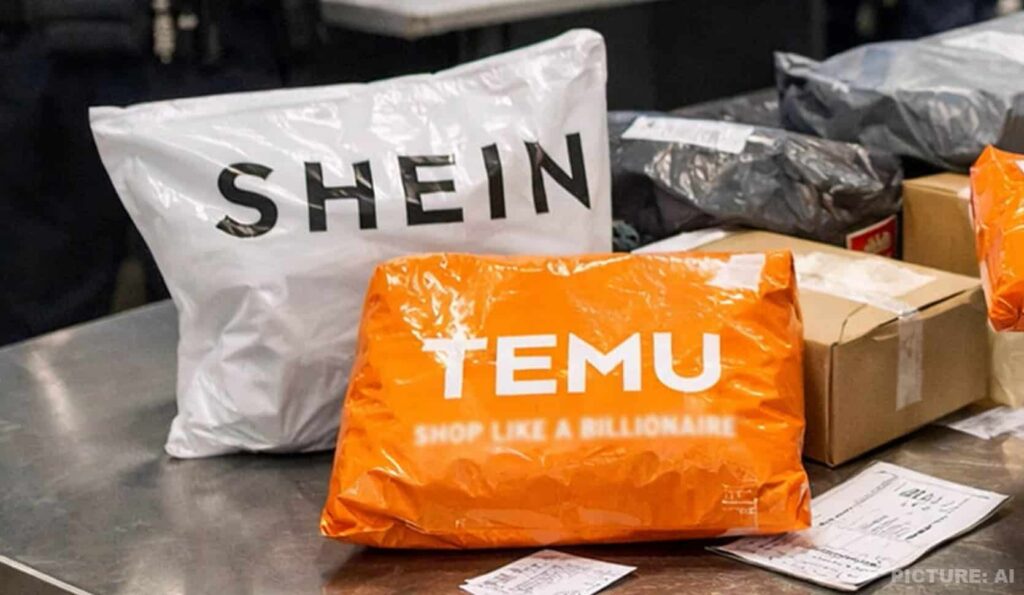
The conflict surrounding the presence of platforms on the French market escalated less than a year ago. Shein opened a physical store in the classic Parisian department store BHV Marais at that time. However, this move was met with protests from established brands who chose to leave the department store. In June, this resulted in the department store terminating all cooperation with the Chinese platform.
Now, the French state, as the first country in the EU, is introducing targeted legislation against the industry.
How the new points system works
The new legislation, adopted by the French parliament during the summer, is based on a points system. The criteria are based on how many product lines a company releases on the market and to what extent customers are encouraged to repair their clothes.
The office of Mathieu Lefèvre, Minister for Ecological Transition, told the website Dagens PS that Shein has over 1.7 million product lines per year. This compares to Zara, which has nearly 20,000.
There is an urgent need to act quickly regarding ultra-fast fashion.
The new fee will be 0.5 euros for a pair of underwear, 2 euros for a t-shirt, 9 euros for a pair of jeans and 12 euros for a jacket.
The system is designed to be gradually increased until 2030, when the maximum ceiling is expected to reach 19.5 euros per garment. However, the fee must never exceed 50 percent of the price of the goods before tax.
H&M and Zara are exempt
Traditional fashion chains such as H&M, Zara, Uniqlo and Primark are not affected by the new rules in their current form.
The EU Commission has given the green light to the legislation, but reactions from China have been negative. In July, China announced that it considers the regulations to be discriminatory and warned of possible countermeasures.
The French fashion industry organization, however, sees a bright future for developments. Yann Rivoallan, President of Fédération Française du Prêt-à-Porter Féminin, told Aftonbladet about the expected effects:
This is a great victory for France. Prices will rise sharply on all platforms, by at least 50 percent.
Ban on influencer collaborations
In addition to the new fees, further tightening awaits from January 1st next year.
Then, a ban will come into effect stopping all advertising for companies within ultra-fast fashion, which also includes collaborations with influencers.
Among French consumers, there are divided opinions about the design of the law. Some young buyers express support for slowing down the rate of consumption and directing purchases towards more sustainable alternatives. Others point to an economic problem.