

A recurring problem in the complaints concerns the technical functionality of social media.
During September 2025, the profile Frida Fahrman uploaded a moving image, a so-called "Reel," to the Instagram platform in collaboration with Hyundai Motor Sweden AB. The video, which was rejected by RO, showed the family's activities from a car.
When the film was subsequently shared to the Stories format on the same platform, the built-in advertising marker stopped working. The profile added a manual text box to clarify the collaboration, but this was displayed for too short a time for the viewer to perceive it before it disappeared.
A similar problem arose for influencer and e-commerce entrepreneur Lovisa Wallin during the launch of a product for her own brand, Niut. In a video on the Youtube platform, the profile presented a new air pressure vibrator. The advertising marker was displayed at the beginning of the clip, but was completely absent during the minutes in the middle of the film where the product was finally shown and discussed.
Another technical attempt was made by Klara Doktorow in an Instagram Story in the spring. The post concerned a lamp from Nordic Nest, where an affiliate link had been marked with the word "adlink". RO assessed that the word itself was not enough for the average consumer to understand that it was advertising.
Hiding the Buy Button Behind a Story
Another challenge arises when authors, artists, or influencers merge editorial content with sales.
In March and April, RO's reviews resulted in rejections for posts where the commercial purpose was hidden. In an Instagram post published by Bingo Rimér, a table of body values was shared accompanied by a text describing a period of illness and weight loss. The story concluded with an invitation to book an appointment at Lejonkliniken for a free body measurement. The post lacked labeling and was rejected on April 23.
The same principle lowered Bingo Rimér. Out at sea, the profile posed in sunglasses by a railing. In connection with this, figures on body values were published, and the text described a period of illness, lost energy and crashed nutrient absorption. The final solution linked to a clinic where followers were offered to visit.
When I mention what I have done in the post, it is for the purpose of explaining my own situation and answering questions from followers, says Bingo Rimér to RO.
The same pattern was found in the profiles of Viktor Norén, Katarina Wennstam and Veronica Maggio, who were all rejected in March 2026. Their posts began by sharing environmental descriptions, script work or reflections on burnout.
To read the full text and access the links to book sales or movie tickets, followers needed to click on Instagram's function to expand the text. RO considered that this meant that the sales intention was not immediately apparent at first glance.
Even Elsa Billgren was rejected after writing a longer post on her blog at Elle.se. Between paragraphs about everyday life and interior design were links to her and Sofia Wood's podcast on Spotify, as well as to the pre-order of a joint book. The messages were considered to be too far down in the post for the reader to immediately identify it as advertising.
Clarity Wins in the Long Run
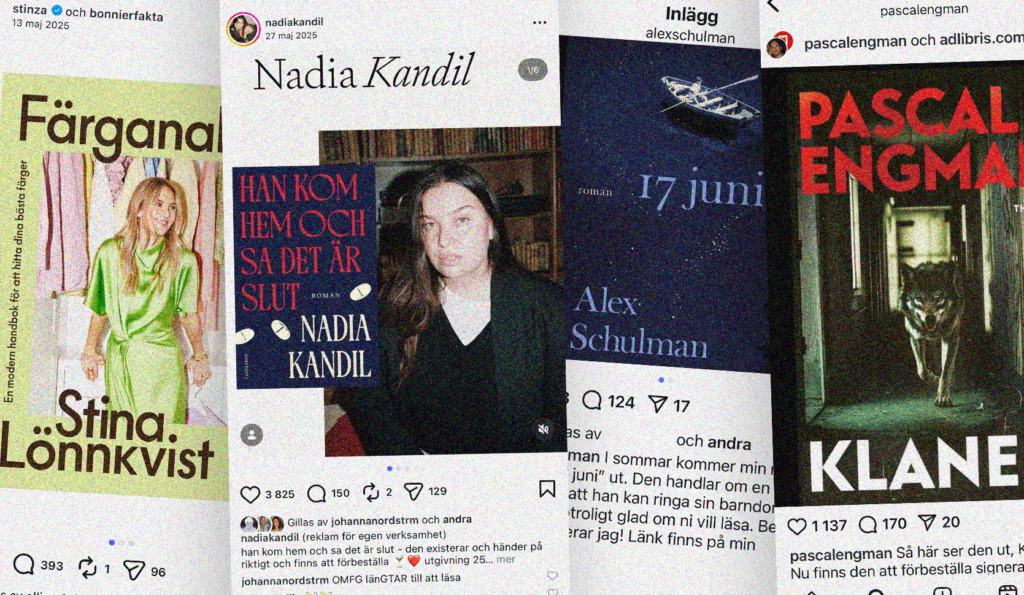
In contrast to the rejected cases, several acquitted media profiles, authors and actors stand out. Common to profiles such as Pascal Engman, Clara Henry, Stina Lönnkvist, Nadia Kandil, Alexander Schulman, Andreas Norlén, David Lagercrantz, Liv Strömquist, Alexander Ernstberger and Magnus Betnér is that their Instagram posts presented the product or service immediately.
During RO's reviews, it was found that large book covers, directly visible calls to buy tickets and exact dates for tour premieres were sufficient to establish the commercial purpose.
The profiles avoided long personal introductions that required a button press to show the rest of the text. Thus, the requirement for transparency was met, regardless of whether a specific advertising label was displayed. The consumer immediately understood that a product was for sale.
Compilation of the profiles and companies that have been reviewed:
Profile |
Company/Advertiser |
Outcome |
Basis for decision |
Frida Fahrman |
Hyundai Motor Sweden AB |
Rejected |
Reel shared in stories, which caused Instagram's collaboration marker to disappear. A manual text box disappeared too quickly.
|
Bingo Rimér |
Lejonkliniken AB |
Rejected |
Post about health and weight loss ended with a sales offer for InBody measurement without advertising labeling.
|
Clara Henry |
Clara Henry AB |
Acquitted |
Clear call to purchase musical tickets. The context made it immediately identifiable as advertising.
|
Pascal Engman |
Pascal Engman AB |
Acquitted |
Marketing of own book. Image on the cover and text about pre-order made it clearly commercial.
|
Stina Lönnkvist |
CC Labs AB |
Acquitted |
Marketing of own book. Cover and sales message made it clear to the consumer.
|
Nadia Kandil |
Kandil AB |
Acquitted |
Marketing of own book. The book cover and text about the publication date and pre-order clarified the purpose.
|
Alexander Schulman |
Alex Schulman AB |
Acquitted |
Marketing of own book. Call to order a signed copy made it immediately identifiable.
|
Andreas Norlén |
Andreas Norlén |
Acquitted |
Post about own book. Cover image and text that the book is out clarified that the authors had a financial interest.
|
David Lagercrantz |
David Lagercrantz |
Acquitted |
Marketing of own book. The text about his novel now being available was sufficient identification.
|
Liv Strömquist |
Rikedomen AB |
Acquitted |
Reissue of own book. Combination of book cover and signing times showed the commercial nature.
|
Alexander Ernstberger |
Alexander Ernstberger |
Acquitted |
Image behind stacked books in a warehouse with the text that you should take advantage of it before they run out again was a clear call to purchase.
|
Elsa Billgren |
Elsa Billgren AB |
Rejected |
Blog post with mixed content where the sales message for the book and podcast came too far down in the post.
|
Viktor Norén |
Victory Music AB |
Rejected |
Post about own book where a personal reflection lay before the breakpoint for more and the sales message was hidden behind a click.
|
Katarina Wennstam |
Katarina Wennstam AB |
Rejected |
A mood description lay before the breakpoint for more and the commercial purpose did not appear at a fleeting contact.
|
Magnus Betnér |
Magnus Betnér AB |
Acquitted |
Marketing of solo tour. The text before the breakpoint about the premiere made it immediately identifiable.
|
Lovisa Wallin |
Niut AB |
Rejected |
Youtube vlog for own products where the advertising marker came too late and was missing at the actual launch moment.
|
Veronica Maggio |
Veronica Maggio AB |
Rejected |
Post about film role where the text before the breakpoint was perceived as a personal reflection rather than advertising.
|
Klara Doktorow |
Nordic Nest AB |
Rejected |
Labeling with the word Adlink on a story with an affiliate link was considered unclear for the average consumer.
|