

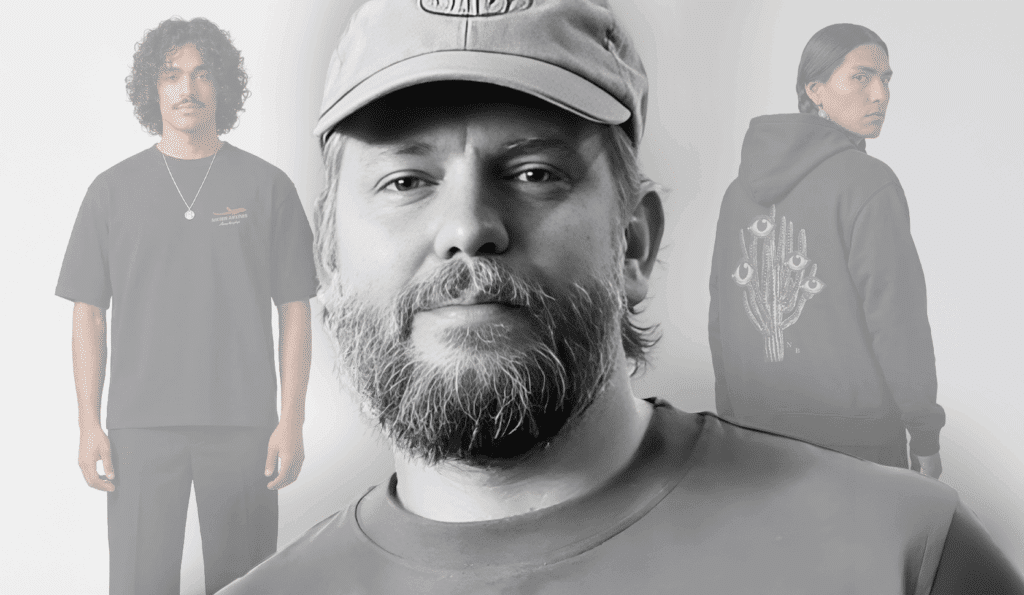
The Stockholm-based streetwear brand Nikben has entered into a collaboration with the AI platform to help create its product photos digitally instead of conducting physical photoshoots.
According to the AI company, this reduces the usual costs and logistics normally required to produce material for e-commerce and marketing. The company has helped Nikben generate photorealistic model images and e-commerce images to showcase the collection.
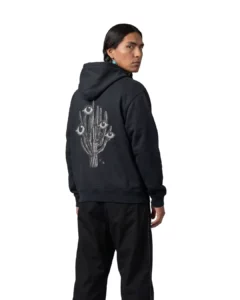
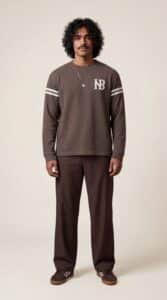
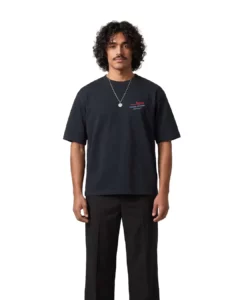
To gain a clearer picture of how the technical interface looks behind the scenes, Ehandel.se asked Henrik Skagerlind Fasth a few questions, who, in addition to being a co-founder of Lumoo, also holds the role of Head of Product & AI.
It's simpler than most people think, but there's more control under the hood than "describe and hope." With us, you enter your product photo – a regular packshot is enough – and then choose a model or create/upload your own model. The system generates ready-made campaign images in seconds, he says.
You don't need to be a photographer or prompt expert. But there is detailed control of everything from camera angle to background environment, however the basic flow is intentionally simple.
Exact Fit Should Reduce Returns
One of the major challenges for e-commerce retailers in fashion is that customers return clothes because they don't fit as expected. So when garments are to be presented and created entirely digitally, the question arises as to how well the final material represents reality.
However, Henrik believes that their platform is specifically built for the fashion industry to maintain brand consistency and a high degree of realism in the images. According to him, the challenge lies in interpreting the properties of textiles.
That's the core issue for us. A typical AI image generator doesn't know the difference between a knitted sweater and a silk blouse – it guesses. We have built our platform specifically for fashion and textiles, so our system actually understands how different materials look and behave on a body.
To counteract misleading marketing that can drive up the return rate, the company has developed a solution that links the garments' true dimensions with the digital body's proportions.
Then we have Lumoo Fit – our function for showing how a garment fits. It uses the product's actual measurements together with the model's measurements to generate an image where the fit is correct. Not a pretty lie, but an honest picture of what the customer actually gets home. That's what reduces returns, says Henrik.
A Rapidly Growing Market
Lumoo Studio AB was registered in February 2025 and has its headquarters in Stockholm. The company is managed by CEO Peter Thörngren and Henrik Skagerlind Fasth, with Erik Wikström as chairman of the board.
The company recently raised SEK 6 million in external capital at a valuation of SEK 42 million. Among the investors are well-known names such as Anton Osika and Johan Stael von Holstein. The company has signed agreements with several major players such as Gant and Gina Tricot.
Ehandel.se asked how the development has looked during the first months of the current year. The company notices a clear shift in the industry's maturity when it comes to image creation.
We've had a very strong start to 2026. Interest from brands and retailers has clearly accelerated – we see that the market is beginning to mature and that AI-produced content is moving from experimentation to actual production with customers, says Henrik.
Although the sales figures for the first quarter of the year are kept internally, the future prospects point to a growing customer base.
I don't want to go into exact figures here, but we have good momentum with well-known brands in the portfolio and a pipeline that reflects the fact that the question is no longer whether to work with AI photography, but how.
Global Expansion Requires Local Content
When e-commerce retailers expand into new markets, there is often a need to adapt the visual communication to local preferences and cultures. A campaign that performs well in Northern Europe does not automatically meet the same reception in other parts of the world.
Do you see e-commerce retailers requesting the ability to localize content?
More than we thought, and that demand is growing. When a brand expands into a new market, they need to not only translate text – they need to adapt the entire visual story. A Scandinavian aesthetic doesn't always land right in the Middle East or Southeast Asia, says Henrik.
Technology now enables this type of geographical adjustment to be performed from the office, eliminating the need to transport personnel and clothing around the world for new photo sessions.
With our technology, we can take an existing campaign image and adapt the model, environment and lighting for a specific market without doing a new shoot. That's a huge cost saving and something we see both established brands and fast-growing e-commerce retailers actively requesting specifically for email marketing and advertising in different channels and markets, says Henrik Skagerlind Fasth.
Several Players In The Market
The market for AI-generated fashion images is growing rapidly and the company is not alone in offering this type of service.
Among the Swedish competitors are, for example, Fashionlab, which recently entered into a collaboration with the e-retailer Bubbleroom to show clothes on AI models in different sizes. The Gothenburg-based startup Weon also works with AI technology to improve fit and reduce returns in fashion e-commerce.
Competition is thus increasing as more e-commerce retailers become aware of digitized photography.
Responsibility And Digital Twins
Despite the technological advances and the economic benefits, there are parts of the development that raise debate.
The question of how AI affects the labor market for models, photographers and stylists is constantly relevant, as is how we as consumers are affected by meeting digital beings rather than real people. When Ehandel.se asks Henrik Skagerlind Fasth what responsibility the technology provider has in this transition, he is clear that the technology is fundamentally changing the industry.
That's an important question, and one we take seriously. AI is changing the fashion industry, just as it is changing all other industries right now. It's not a question of if, but how. And there we, as a technology provider, have a responsibility, he says.
Instead of AI making creative professions redundant, he believes that the tools will redirect how the work is performed in the future.
Our view is that AI does not replace creativity, personality or competence. But it changes how they are used. A photographer works differently in ten years. A model too. It's inevitable. The question is whether that change happens in a way that creates new value for them, or just takes away the old. I see that it creates new value.
To address the concern about rights and compensation for professional models, the company has entered into a partnership with Acasting. The purpose is to allow real people to license their digital copies for commercial use.
We have a partnership with Acasting that licenses digital twins based on real models' identity, movement and personality. The model owns their likeness, licenses it, and earns from each use. Think about how Spotify changed the music industry. It was painful in the transition, but it also created a new system where more artists can actually make a living from their music. We want to be involved in building that system for the modeling world, not circumvent it.
He concludes by pointing out that the platform's goal is not to erase the human aspect of e-commerce.
We do not believe in an industry where we meet consumers exclusively with generic, faceless AI figures. We believe in an industry where real people's creativity, aesthetics and identity are scaled with technology, says Henrik Skagerlind Fasth.