
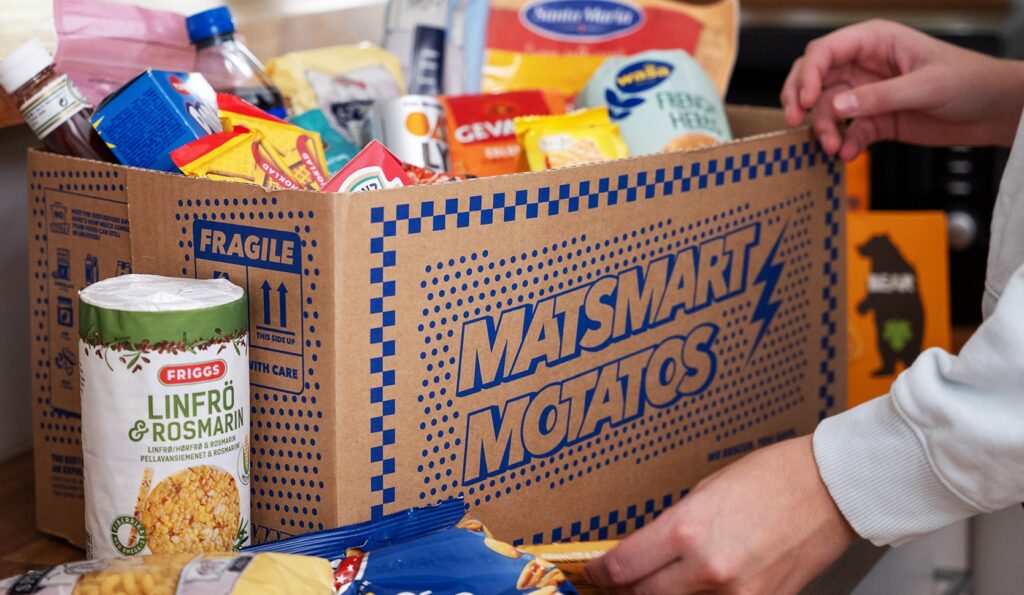
As VAT on food is adjusted down from 12 to 6 percent, Matsmart states that they will lower prices on the platform to the same extent. However, the e-commerce player points out that the current tax system does not make any difference between newly produced goods and products that are approaching their best-before date or are at risk of being discarded for other reasons.
To measure how consumers' choices in the online store change with economic incentives, the company is conducting a test between April 1st and 7th. During this week, rescued food will be offered at prices that effectively correspond to 0 percent VAT.
The background to the e-commerce company's initiative is the volumes of food that are discarded annually. According to figures from the Swedish National Food Agency, an average person throws away 34 kilos of edible food each year, leading to an additional expense for the country's households.
The food VAT is being lowered to strengthen household finances, but at the same time we are still throwing away large amounts of perfectly edible food. Not just in homes, but throughout the food chain from production to store. For many households, it's about several thousand kronor that literally end up in the trash. According to the Swedish National Food Agency, it amounts to several thousand kronor per household each year - a hidden cost that many underestimate, says Ida Strandberg, Marketing Manager at Matsmart.
Price Drives The Customer
The company is using the test to raise the issue of how political instruments could be adapted to reduce food waste in the food chain. The online store points to the UN's global goals within Agenda 2030, where one of the sub-goals is to halve global food waste.
Matsmart believes that a targeted tax reduction specifically for at-risk products could have clear effects on both the wallet and the environment. By offering a simulated VAT exemption online, the e-commerce company hopes to obtain data on how the price level drives the transition to more circular behavior.
Today, the tax system makes no difference between food that is newly produced and food that would otherwise be discarded. We want to contribute to the discussion about how such instruments could affect consumption behavior towards more sustainable development. Many want to help reduce food waste, but ultimately it is often the price that decides. By shopping for rescued food, households can already reduce their food costs by up to 50 percent compared to shopping in traditional grocery stores, says Sofie Zettergren, Acting CEO of Matsmart.