
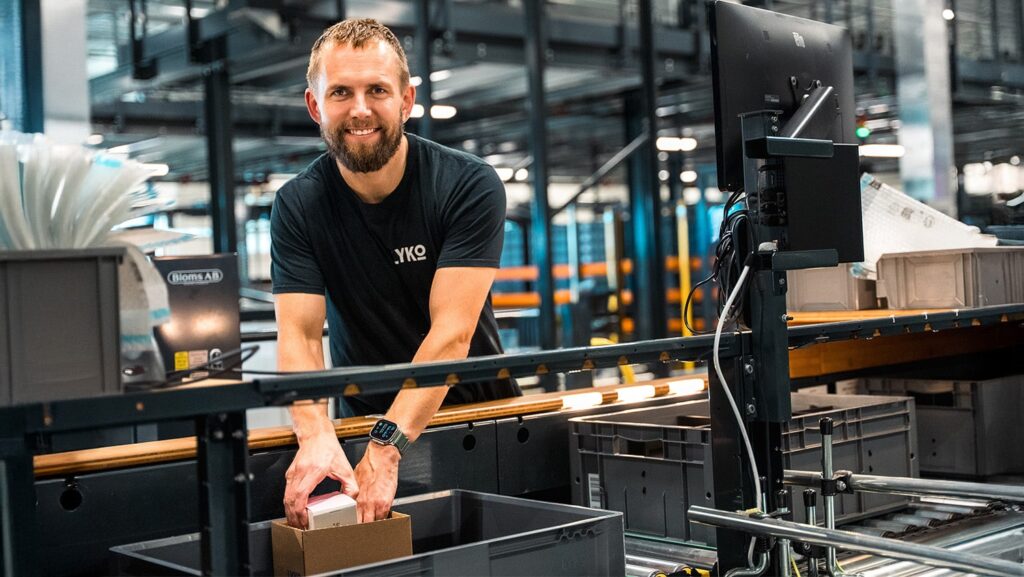
The solution in Vansbro has been developed over just over three years together with supplier Vanderlande. The logistics chain has been updated and the company is now transitioning to a process where goods are transported via automated belts and picked by robots directly into the customer's final packaging.
The e-commerce retailer has also invested in machines that adjust the height of the cartons according to the contents of each order. The purpose is to optimize packaging, reduce the amount of air in the packages and create more space-efficient deliveries.
It feels good that warehouse automation is now fully operational and that we have completed this project. We have spent over three years on this, from planning and construction of the building to getting the hardware in place, developing software and finally carrying out the test of maximum capacity. It is an effort by all employees, supplier Vanderlande and our other partners, says Rickard Lyko, CEO of Lyko.
Layoffs and Reduced Margins
The commissioning of the warehouse takes place at a time when the company has an increased focus on profitability. At the end of January, the e-commerce retailer announced that 70 employees in the office will be laid off in a cost-saving program that will reduce annual expenses by SEK 100 million.
The start-up of the warehouse automation worked well technically, but the costs of getting the business up and running before the peak season were higher than calculated.
In connection with the layoffs, the CEO explained that the decision to cut back was the most difficult the company had to make. He also expressed disappointment at having broken his previous promise to avoid major restructuring and layoffs. At the same time, he clarified that the company will continue to grow, but with a cost structure that is more adapted to the current market.
According to the company's latest annual report, sales continued to increase last year, but fierce price competition and customers looking for cheaper alternatives put pressure on margins. During the fourth quarter of the year, the e-commerce retailer reached a turnover of SEK 1.3 billion and an operating profit of SEK 16.4 million. For the full year, turnover amounted to SEK 4 billion and operating profit totaled SEK 78 million.
Debts Reclassified and Loans Extended
Now that the automation project is formally completed, the company is initiating its depreciation of the facility, which is expected to continue for 10 years starting in March. The company also begins amortizing the loans that financed the construction from the second quarter.
The company has agreed with the banks to extend its revolving credit facilities until 2028. This leads to the e-commerce retailer's short-term debts to credit institutions of SEK 259.2 million being reclassified as long-term debts from the first quarter.
In addition to this, the company has a loan of SEK 498.8 million which also runs until 2028.