
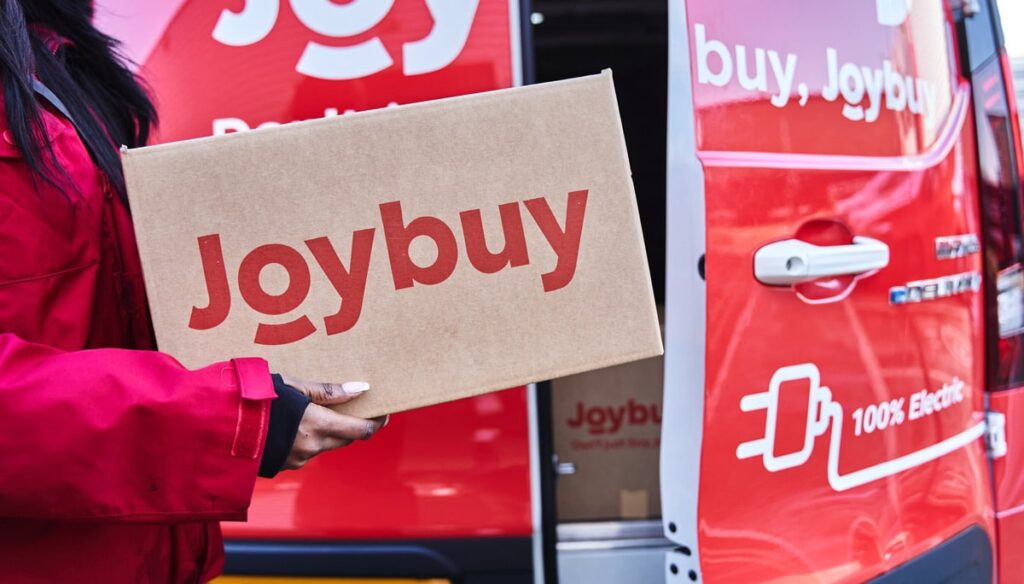
Despite JD.com recently rolling out Joybuy in six European countries, data analysis firm GlobalData points out that the strategy behind the launch has been shaped by previous setbacks. In 2024 and 2025, JD.com attempted to acquire the British retail chains Currys and Argos, but both deals ended without agreement.
Oliver Maddison, retail analyst at GlobalData, notes that this has affected the conditions for the establishment:
Despite JD.com’s strong foundations in supply chain and logistics, launching Joybuy from scratch was unlikely to be their preferred approach, and it will mean an uncertain start.
Ceconomy Deal A Central Piece Of The Puzzle
Although the British acquisitions did not materialize, JD.com has strengthened its position on the continent through other deals. As Ehandel.se previously reported the group acquired the German retail giant Ceconomy last year – which owns MediaMarkt and Saturn – for 2.2 billion euros.
According to GlobalData, this acquisition gives JD.com access to an extensive European distribution network. However, there are question marks about how quickly the synergies can be realized. In a comment to Ehandel.se recently, JD.com stated that it is awaiting confirmation of whether Ceconomy's stores will be used as local e-commerce warehouses, as the deal is still in a regulatory approval process in three countries.
Challenges Amazon With Aggressive Pricing
To gain market share in the absence of an established brand, Joybuy is now focusing on challenging Amazon directly through price and logistics. The company has set its threshold for free shipping at £29/€29, which is lower than Amazon's £35. In addition, Joyplus membership is priced at £3.99 per month, significantly lower than Amazon Prime's £8.99.
However, Maddison emphasizes that pricing is only half the battle:
Joyplus is competitively priced, but the membership is barely marketed, which hinders its appeal compared to Amazon’s service.
Logistics Drives Expansion Rate
A central part of Joybuy’s offering is “Double 11” – same or next-day delivery. This model, however, requires extensive physical infrastructure. At launch in the six countries (United Kingdom, Germany, France, Netherlands, Belgium and Luxembourg), around 60 warehouses and depots were put into operation.
Regarding future expansion to Sweden and the Nordics, JD.com previously told Ehandel.se that it does not rule out further markets, but that the pace is entirely governed by how quickly the local network of warehouses and sorting terminals can be established. According to GlobalData, reach is crucial for whether Joybuy can become a real threat to Amazon’s dominance.