

In March 2026, the total sales development for grocery retail landed at 5 percent compared to the same month of the previous year. For the first quarter of the year, total sales amounted to SEK 76.7 billion excluding VAT. The accumulated development for the year is thus 4.4 percent.
Grocery retail showed positive sales growth in March. The low price development for food continues, which means that we are seeing growth in both value and volume for grocery retail. During the month, the development has been particularly strong for e-commerce, says Karin Brynell, CEO of Svensk Dagligvaruhandel.
Of the reported total sales, physical stores account for the largest share. During the first quarter of the year, physical stores turned over SEK 72.9 billion and showed a growth of 4.7 percent in isolated terms for March.
The report also takes into account how the days fall in the calendar, and for March, this calendar effect was 1.6 percent.
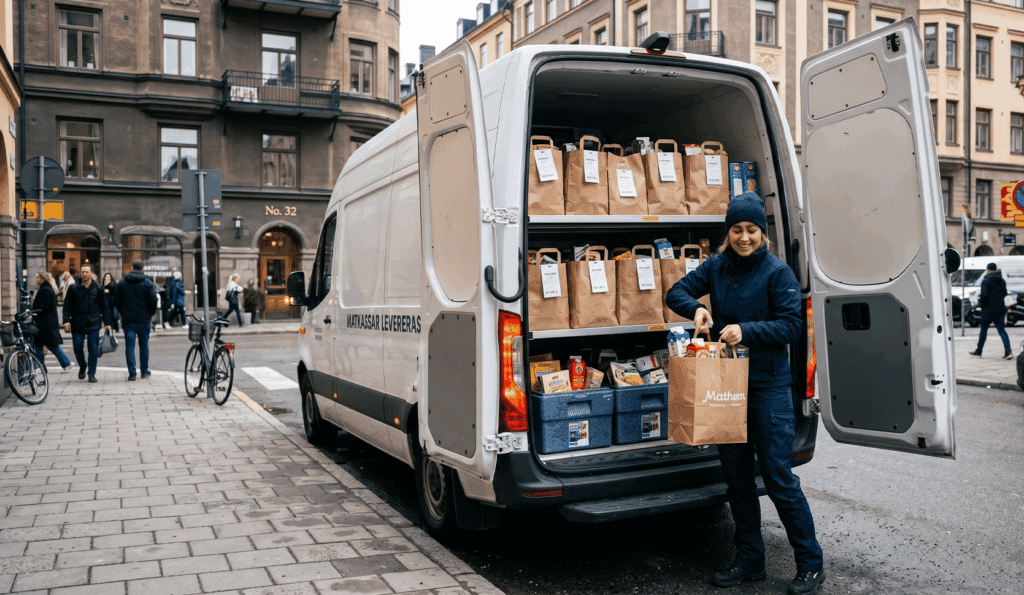
E-commerce in Food Increases by Double Digits
When examining the part of the industry that takes place online, a different growth rate emerges. E-commerce in groceries increased by 11.1 percent in March. For the entire first quarter, e-commerce turned over SEK 3.7 billion, which gives an accumulated development of 9.3 percent so far in 2026.
The total e-commerce consists of meal kit sales and pick-and-pack sales, writes Svensk Dagligvaruhandel in the report.
By dividing up e-commerce sales into different delivery options, it appears that home delivery is the option that is currently growing the fastest. In March, e-commerce with home delivery had a sales development of 12.9 percent, compared to pick-up in store, which had a development of 8.7 percent during the same period.
The share of total sales that constitutes e-commerce is currently 4.8 percent in 2026. For March, this e-commerce share consists of 2.8 percent home delivery and 2 percent pick-up in store.
Preparations Ahead of Adjusted Food VAT
On April 1, 2026, the VAT on food was adjusted down from 12 to 6 percent for a limited period. To ensure this transition, actors in the grocery retail sector have worked to adapt pricing, update cash register systems and prepare information in store environments.
This process took place in stages during the first months of the year and required the most effort in the last days of March, so that everything would work in practice when the change came into force.
The industry welcomes political measures that are noticeable in households' wallets. Ahead of the VAT reduction, grocery retail has carried out extensive work, both on the shop floor and in underlying systems, to ensure that the change would take effect from day one. At the same time, food prices are still affected by external factors such as raw material prices, energy, transport and currency, which means that expectations of the effect of this tax reduction need to be realistic, concludes Karin Brynell.